Costco Statistics 2026: Warehouses, Membership and Kirkland Numbers
-
 Written by
Rajat Singh
Written by
Rajat Singh
- Published
- Updated
- Read time 15 min read
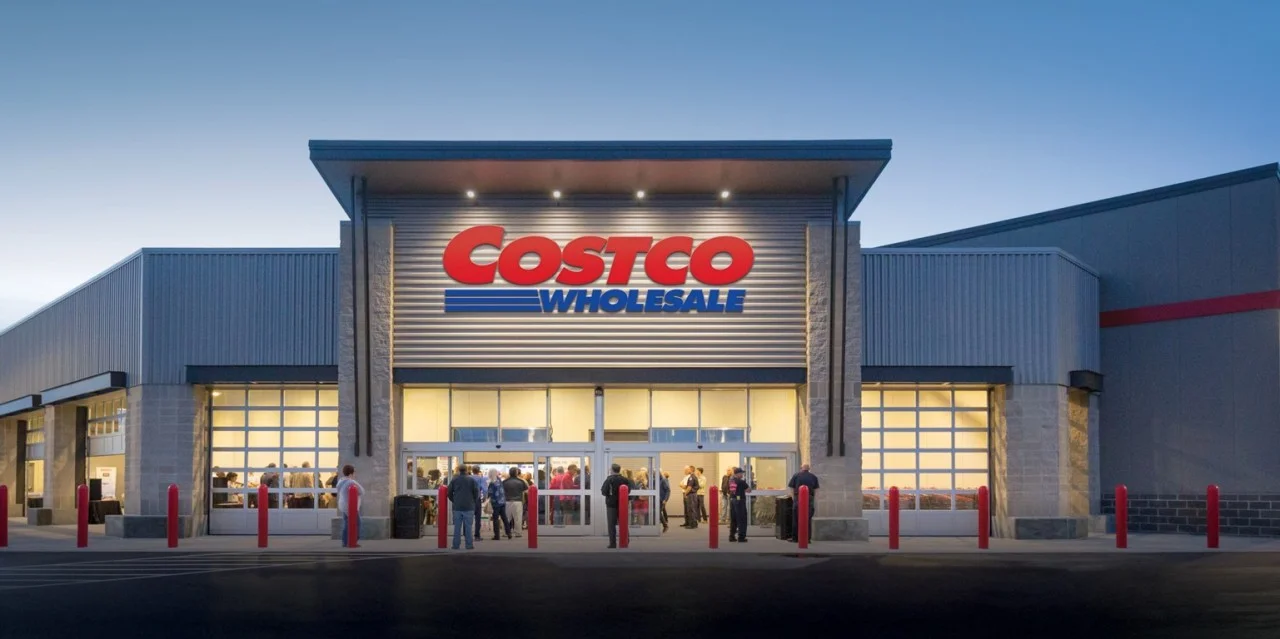
In September 2024, Costco raised its membership fee for the first time in seven years, from $60 to $65 for standard members and $120 to $130 for Executive members. The obvious risk was that members would walk, especially the price sensitive ones who joined specifically for the value math.
On This Page 15 sections
They didn’t. By the end of fiscal 2025, individual memberships had grown to 68.3 million, up from 63.7 million a year earlier, and renewal rates held near 92% in the US and Canada. That result is the real starting point for understanding Costco’s business today, not a generic list of store counts.
Key facts:
- Costco operated 928 warehouses worldwide as of its Q3 fiscal 2026 report (quarter ended May 10, 2026), up from 914 at the close of fiscal 2025.
- Individual memberships reached 68.3 million by the end of fiscal 2025, growing despite a September 2024 fee increase, though the growth rate decelerated from 7% to 6% year over year.
- Kirkland Signature generated approximately $90 billion in sales in 2025, roughly 33% of Costco’s total merchandise sales, according to Costco’s own 2026 shareholder report.
- Executive members reached 41.2 million in Q3 fiscal 2026, up 9.6% year over year, and account for 75% of Costco’s total sales despite being roughly half of paid members.
- Worldwide membership renewal was 89.7% in Q3 fiscal 2026, down slightly from 90.2% a year earlier, a small but real softening worth tracking rather than ignoring.
Warehouse Count and Where Growth Is Happening
Costco closed fiscal 2025 with 914 warehouses worldwide, up from 890 a year earlier, a net addition of 24 locations after opening 27 (including 3 relocations): 15 in the US, 2 in Canada, and 7 across other international markets. By its Q3 fiscal 2026 report, that count had risen further to 928 warehouses. The average Costco warehouse runs about 147,000 square feet, close to three and a half times the 42,272 square foot average for a US supermarket reported by the Food Industry Association in 2025.
Costco total warehouse count by fiscal year end, plus the latest quarterly figure. Source: Costco annual SEC filings filings and Q3 FY2026 earnings report, May 2026.
Growth has stayed measured rather than aggressive, a deliberate pattern for a format that depends on high sales density per location. Opening too fast risks diluting the traffic that makes the membership fee math work in the first place.
That said, Costco has signaled it wants to grow faster going forward. CEO Ron Vachris announced a target of opening 30 or more warehouses annually over the next five to 10 years, roughly split between the US and international markets, backed by a $6.5 billion investment planned for fiscal 2026 alone covering 28 new locations.
International growth remains selective rather than broad. China, one of Costco’s newer and most closely watched markets, had grown to 7 warehouses as of Q2 fiscal 2026, a small footprint that reflects a deliberately cautious approach after its first Shanghai store opened on August 27, 2019, and had to close early the same day when crowds overwhelmed the parking lot and aisles, with more than 130,000 people signing up for membership in that single day alone.
What Actually Happened After the Fee Increase
The September 2024 fee increase was Costco’s first in seven years, and the company had real reason for caution given how central low friction renewal is to the whole business model. The results, now fully visible in the fiscal 2025 annual figures, show the increase didn’t meaningfully damage retention.
| Metric | FY2023 | FY2024 | FY2025 |
|---|---|---|---|
| Individual memberships | 58.8M | 63.7M | 68.3M |
| Business memberships | 12.2M | 12.5M | 12.7M |
| YoY membership growth | N/A | 7% | 6% |
Source: Costco fiscal year 2025 annual SEC filings and related earnings coverage, filed October 2025.
The one honest asterisk on that story is the growth rate itself, which decelerated from 7% to 6% year over year. That’s not evidence the fee increase failed, membership still grew by 4.6 million individual members in a single year, but it’s also not nothing, and a source claiming the increase had zero effect on the growth curve would be overstating the case.
Why Costco cares so much about protecting that fee income comes down to where its actual profit sits. Analysts calculating the split differently arrive at different exact percentages, but they consistently agree membership fees account for well over half of Costco’s operating income despite representing only about 2% of total revenue, since merchandise itself is sold at deliberately thin margins.
The Executive Membership Flywheel, in Current Numbers
Executive membership costs $130 a year in the US and Canada and pays back 2% of qualifying purchases, up to $1,250 annually, as a reward credited back to the member. That structure concentrates spend at Costco specifically, since the reward only pays out on Costco purchases.
Executive members reached 41.2 million in Q3 fiscal 2026, up 9.6% from a year earlier, growing faster than Costco’s overall paid membership base. That’s roughly half of all paid members, yet Executive members alone account for 75% of Costco’s total sales, a concentration that explains why Costco keeps pushing standard members to upgrade rather than treating the two tiers as equally valuable.
Membership fee income overall grew 10.7% in Q3 fiscal 2026, outpacing the 4.1% growth in total paid members, which is only possible because a growing share of the base is paying the higher Executive fee rather than the base fee.
Digital Growth Is Real, Not Just a Talking Point
Costco’s digitally enabled comparable sales grew 21.5% in Q3 fiscal 2026, a meaningfully faster growth rate than the company’s overall 9.8% comparable sales figure for the same quarter. That gap shows digital genuinely accelerating rather than just tracking alongside store growth.
Costco still treats digital as an extension of the warehouse relationship rather than a separate channel competing for the same sale. Same day grocery delivery, bulky hardlines shipped to home, and business delivery all expand what a member can buy from Costco without adding a second membership fee or diluting the core in person model.
Kirkland Signature Is Larger Than Most People Realize
Kirkland Signature, Costco’s private label brand, generated approximately $90 billion in sales in 2025 according to Costco’s own 2026 shareholder report, up more than $15 billion from 2024. Against Costco’s roughly $270 billion in total 2025 merchandise sales, that puts Kirkland at close to a third of everything Costco sells.
$90 billion in annual sales would rank Kirkland among the largest consumer packaged goods companies in the world if it were a standalone business, ahead of many publicly traded brands most shoppers would recognize by name faster than they’d recognize Kirkland as a company rather than a store label.
The brand’s function goes beyond margin. Kirkland lets Costco set its own quality specifications rather than negotiating them with a third party manufacturer, which is part of why the brand carries genuine trust with members rather than reading as a cheaper, lower quality alternative to a name brand product.
Why Costco’s Gas Stations Matter More Than the Margin Suggests
Gasoline represented about 11.7% of Costco’s total merchandise sales in 2025, a meaningful chunk of revenue that Costco deliberately runs at close to break even margins rather than treating as a profit center. Q3 fiscal 2026 results specifically credited record gasoline volumes as a driver of the quarter’s strong results.
The logic mirrors the hot dog: fuel prices are one of the easiest numbers for a shopper to compare in real time, since gas stations post prices on a sign visible from the road. Winning that visible, low margin comparison builds the same price trust that then extends to categories where a shopper can’t as easily verify Costco’s price is actually competitive.
The $1.50 Hot Dog Isn’t Marketing, It’s Policy
Costco’s food court hot dog and soda combo has cost $1.50 since 1985, a price that has never once been raised in more than four decades of operation. If it had simply tracked inflation since then, the same combo would cost roughly $4.65 today, more than three times the current price.
Keeping that price fixed hasn’t been passive. Costco built its own hot dog manufacturing plants in Los Angeles and Chicago specifically to control production costs rather than absorb a supplier’s rising prices, and it recently swapped the traditional 20 ounce fountain drink for an optional 16.9 ounce bottle of Kirkland Signature water, adjusting the offering without touching the price itself.
The hot dog isn’t a meaningful profit center on its own, but it functions as a visible, easily checked proof point for Costco’s broader pricing discipline. If a member can verify the food court price hasn’t moved in 40 years, it’s a small, concrete reason to trust that the warehouse floor pricing follows the same logic.
Who Actually Shops at Costco
Numerator’s consumer panel data, the primary source most retail analysts cite for Costco’s shopper base, shows a household profile skewed meaningfully above the national average on income. Median Costco member household income runs around $128,000, roughly 60% above the US median household income.
Roughly 36% of Costco shoppers report household income above $125,000, and another 46% fall between $40,000 and $125,000, meaning the large majority of the base is middle income or above rather than concentrated at either extreme. Women make up about 72% of Costco shoppers, consistent across multiple independent panel reads.
| Age band | Share of members |
|---|---|
| 35 to 44 | About 33% |
| 45 to 54 | About 29% |
| 55 to 64 | About 27% |
Source: Numerator consumer panel data, as reported via multiple retail analyst summaries, 2026.
Those three age bands alone cover roughly 90% of Costco’s membership base, a tighter concentration than most retailers show. That matters for marketers: Costco’s core customer isn’t young shoppers or retirees, it’s working age households in their prime earning and family building years.
How Costco Compares to Sam’s Club
Costco and Sam’s Club, owned by Walmart, are the two dominant US warehouse clubs, and panel data comparing them consistently shows Costco skewing wealthier and more urban while Sam’s Club leans more rural and slightly older. Numerator based comparisons reported by Business Insider found Costco members visiting more frequently and spending roughly twice as much annually as the typical Sam’s Club member.
Neither club publishes a head to head comparison itself, so this remains third party panel data rather than a company confirmed figure, worth stating plainly given how often that distinction gets dropped in coverage of the two chains.
Both retailers benefit from the same underlying dynamic during periods of price sensitivity: shoppers consolidating more of their overall spend into fewer, larger trips to control both cost and time. Neither club’s growth in 2025 and 2026 came at the direct expense of the other, both grew, which suggests the category itself is expanding rather than the two simply trading share.
The Executive Early Access Hour
Costco rolled out an early access shopping hour for Executive members at many US warehouses, moving from a limited soft launch in mid 2025 to broader enforcement by September 2025. Standard members continue to shop at their warehouse’s regular posted hours, with no change to their existing access or shopping experience.
The policy is a direct extension of the same logic behind the Executive tier’s 2% reward: give the members who already generate 75% of sales a tangible reason to stay in that tier, without changing the value proposition for base members who haven’t upgraded. Exact hours still vary by warehouse, so checking a specific location’s posted schedule remains necessary rather than assuming a uniform national rollout.
Why Costco Deliberately Carries Fewer Products
A typical Costco warehouse stocks around 3,700 to 4,000 SKUs, a small fraction of the roughly 50,000 items a typical Walmart carries. That’s not a limitation Costco is working around, it’s the deliberate core of what the company itself describes as its treasure hunt merchandising strategy, confirmed directly on Costco’s own customer service site.
Fewer SKUs means faster purchase decisions and higher sell through velocity per item, since Costco isn’t splitting demand across ten competing brands of the same product the way a traditional supermarket does. It also means genuine scarcity: when a specific item rotates out, it may not come back, which is structurally different from a retailer manufacturing fake urgency around a product that will simply restock next week.
That rotation is also why frequent Costco trips keep turning up something new worth buying that wasn’t there last visit, a real mechanic behind the trip frequency numbers covered elsewhere in this article, not just a marketing description of the shopping experience.
Costco’s Return Policy, Confirmed Directly
Costco’s official policy, stated directly on its own customer service site, is a “Risk Free 100% Satisfaction Guarantee” covering most merchandise with no stated time limit at all. That’s genuinely unusual among large retailers and worth confirming rather than repeating secondhand, since the exceptions matter as much as the headline promise.
Electronics carry a firm 90 day exception: televisions, projectors, computers, touchscreen tablets, smart wearables, cameras, drones, camcorders, MP3 players, cell phones, and major appliances all have to come back within 90 days of the purchase or delivery date. Certain categories are entirely non refundable regardless of timing, including cigarettes and alcohol where prohibited by law, precious metals, gift cards, airline tickets, and custom ordered products.
The unlimited window on general merchandise functions similarly to the hot dog and the gas pricing covered above: it’s a visible, easily understood trust signal that reduces the perceived risk of buying in bulk, which is exactly the purchase behavior Costco’s entire format depends on.
What This Actually Means for Shoppers
The fee increase holding without denting renewal is a genuinely useful data point for anyone deciding whether membership is still worth it: the people already inside the system voted with their wallets and stayed. That’s a stronger signal than any marketing claim Costco could make about its own value.
For a household deciding between the base and Executive tier, the math is straightforward given the numbers above. Spending enough at Costco annually to clear roughly $6,500 in qualifying purchases nets a $130 reward that covers the Executive fee itself, meaning above that threshold the upgrade effectively becomes free.
Getting the most out of a membership still depends on shopping the bulk format deliberately rather than by habit, since not every household actually consumes enough of a given item to make a large pack size cheaper per unit than a smaller one bought elsewhere. Our broader grocery savings guide covers that unit price comparison logic in more detail for shoppers splitting spend across multiple stores rather than relying on one warehouse club exclusively.
None of this requires a grocery shopping habit built entirely around Costco. A household that treats it as one part of a broader routine, alongside a warehouse alternative like Sam’s Club for specific categories, can still benefit from Kirkland’s price gap on staples without restructuring their entire shopping pattern around one retailer.
The Pattern Underneath All of This
The hot dog, the fuel margin, the unlimited return policy, and the deliberately limited SKU count aren’t separate quirks of Costco’s business, they’re the same underlying strategy expressed across four completely different departments. Each one sacrifices a visible, easily verifiable margin in exchange for a trust signal that’s harder for a competitor to fake without genuinely matching the underlying discipline.
That’s also why the September 2024 fee increase held without damaging renewal. Members weren’t evaluating Costco on the $5 or $10 price change in isolation, they were weighing it against a pattern of pricing behavior they’d already watched hold steady for years, in some cases for four decades running.
Whether that pattern holds through the next decade of Costco’s planned expansion, adding 30 or more warehouses a year while keeping the same low SKU count and razor thin margins on fuel and food court items, is the actual open question for anyone tracking the company rather than just repeating its current numbers.
Frequently Asked Questions
How many Costco warehouses are there?
Costco operated 928 warehouses worldwide as of its Q3 fiscal 2026 report for the quarter ended May 10, 2026, up from 914 at the close of fiscal 2025. The company adds warehouses at a measured pace of roughly 20 to 30 net new locations per year.
Did Costco’s membership fee increase hurt renewal?
No, renewal rates held near 92% in the US and Canada through fiscal 2025, the year following the September 2024 fee increase to $65 for standard and $130 for Executive memberships. Membership growth did decelerate slightly, from 7% to 6% year over year, though the base still grew by millions of members.
How much does Kirkland Signature actually sell?
Kirkland Signature generated approximately $90 billion in sales in 2025 according to Costco’s own 2026 shareholder report, up more than $15 billion from 2024. That’s roughly 33% of Costco’s total merchandise sales for the year.
What percentage of Costco members have Executive membership?
Executive members reached 41.2 million in Q3 fiscal 2026, roughly half of Costco’s 82.9 million total paid members. Despite being about half the membership base, Executive members account for 75% of Costco’s total sales.
Who is the typical Costco shopper?
Numerator panel data shows the typical Costco household earns a median income around $128,000, about 60% above the US median, with women making up roughly 72% of shoppers. The core age range is 35 to 64, covering close to 90% of the membership base.
Is Costco or Sam’s Club better?
Panel data shows Costco members visit more often and spend roughly twice as much annually as the typical Sam’s Club member, with Costco skewing wealthier and more urban while Sam’s Club leans more rural. Neither company confirms this comparison directly, so it reflects third party consumer panel data rather than a company reported figure.