Perfume Statistics 2026: Market Size, Niche Brands, and Counterfeits
-
 Written by
Rajat Singh
Written by
Rajat Singh
- Published
- Read time 15 min read
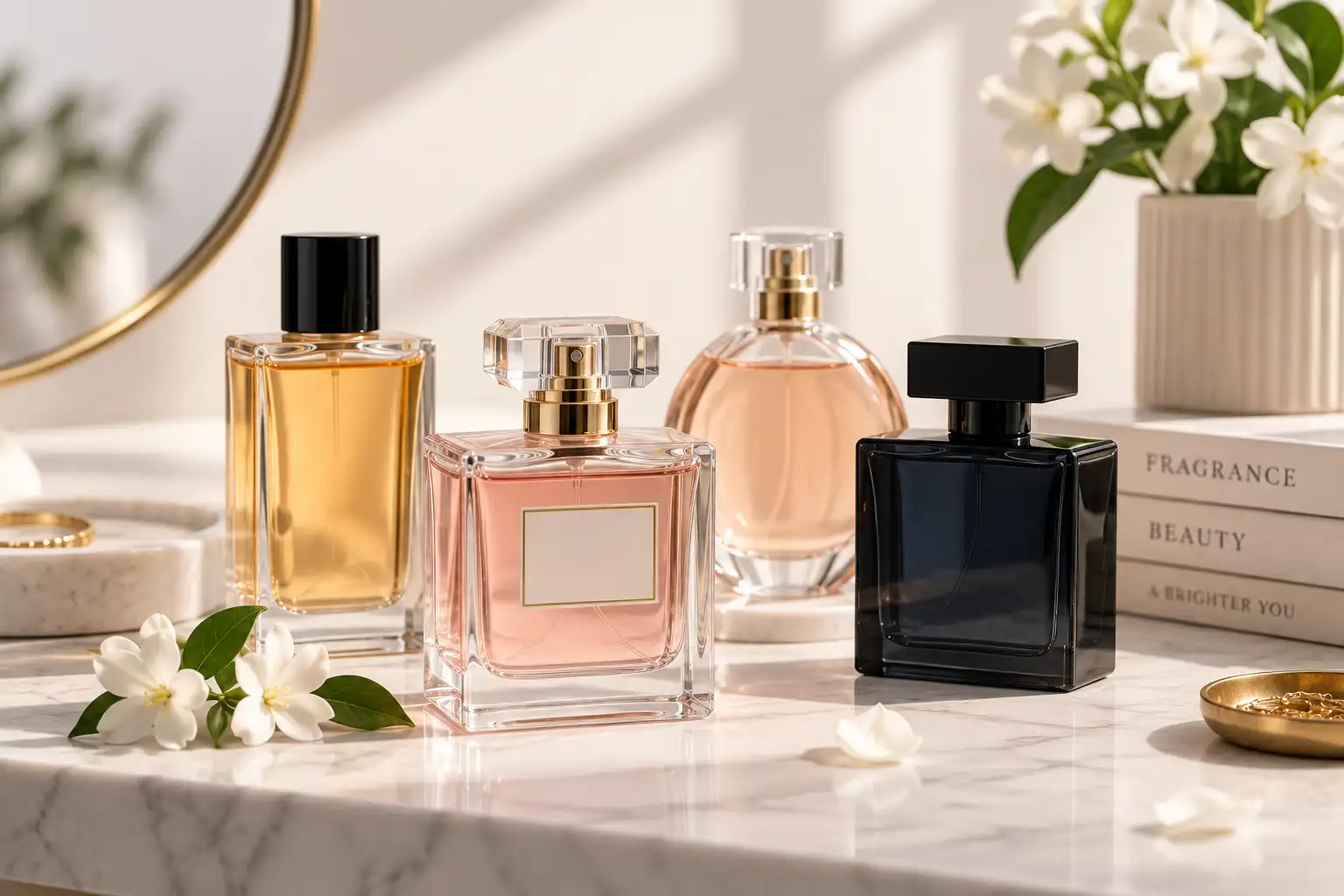
Most bottles of perfume never mention who actually made the scent inside them. Chanel No. 5 carries Chanel’s name on the label, but the actual formula was developed by perfumers working for one of a handful of specialist fragrance houses most shoppers have never heard of, companies like Givaudan, DSM Firmenich, and Symrise that quietly formulate the juice behind thousands of branded bottles.
On This Page 11 sections
That split, between who formulates a scent and who puts a name and a price tag on the bottle, is the part most “perfume statistics” roundups skip entirely in favor of a single market size number. This piece covers both sides of that industry, the market size disagreements, the niche brand boom outpacing every major conglomerate, where the raw materials actually come from, the holiday sales spike that carries nearly half the year’s revenue, and the counterfeit problem sitting underneath all of it.
Beauty coverage on this site works the same way elsewhere. Our broader beauty industry statistics piece covers the full category, while skincare gets its own dedicated breakdown, exactly the treatment fragrance is getting here.
- The global perfume market is valued at roughly $64.1 billion for 2026, though a broader “perfume and fragrance” definition from another research firm puts the same year at $81.52 billion.
- Niche and indie perfume brands grew sales 46.3% year over year, more than 4 times faster than fragrance brands owned by major conglomerates, which grew just 11.4% over the same period.
- Roughly half of all annual prestige fragrance sales happen during the holiday season alone, with December driving 60% of the fourth quarter’s total.
- Up to 10% of all perfume sold worldwide is estimated to be counterfeit, a fake market projected to more than quadruple from $3.14 billion in 2025 to $13.61 billion by 2035.
- The industry runs on two separate tiers of company, ingredient houses like Givaudan and DSM Firmenich that formulate scents for hire, and brand owners like Puig and Interparfums that license the names on the bottle.
Global Market Insights, Business Research Insights, Scento industry tracking, and Circana. Checked September 2026.
Why the Market Size Number Changes Depending on the Source
Three separate research firms published a 2026 global market size for perfume, and the gap between the lowest and highest figure runs to more than $17 billion. Global Market Insights puts the perfume market at $64.1 billion for 2026, growing to $85.5 billion by 2035 at a 3.3% annual rate. Coherent Market Insights lands almost exactly alongside that at $64.81 billion, but projects a much steeper climb to $100.71 billion by 2033.
Three named 2026 global market size estimates. Business Research Insights scopes to a combined “perfume and fragrance” category; the other two firms scope specifically to perfume.
That scope difference explains most of the gap. Business Research Insights values the combined perfume and fragrance category at $81.52 billion for 2026, climbing to $131.15 billion by 2035, a wider definition that folds in body sprays, deodorant adjacent scent products, and home fragrance alongside bottled perfume itself.
The United States remains the single largest national fragrance market by a wide margin. Industry trackers estimate the country accounts for roughly 21% of global fragrance consumption, around $22 billion in 2026 alone, more than any other individual country tracked.
Mass Market Sells More Bottles, Prestige Sells More Dollars
Revenue share and bottle count tell 2 different stories about the same market. Mass market perfume held 48.7% of global fragrance revenue in 2025, the larger slice by dollar value, but that same mass tier, generally priced under $50 a bottle, accounts for roughly 65% of every bottle physically sold worldwide.
That gap means the average prestige bottle sells for meaningfully more than the average mass market bottle, and the growth rates are diverging too. Prestige fragrance sales in the US are growing at roughly 12% a year, 3 times the 4% pace of mass market fragrance over the same stretch, a premiumization trend that shows up clearly in dollar terms even without a single new bottle being sold.
Put plainly, a shopper comparing perfume prices across a drugstore rack and a department store counter isn’t just seeing a packaging difference. They’re looking at the fastest and slowest growing halves of the exact same global market, split by price point rather than by brand, category, or region.
The Industry Runs on Two Completely Separate Tiers of Company
Almost nobody outside the industry can name the company that actually formulated their favorite perfume, and that’s by design. A small group of specialist fragrance and flavor houses compete for contracts to develop scents on behalf of the brands whose names end up on the bottle, a business model closer to a component supplier than a consumer brand.
Givaudan is the largest of these houses, reporting SFr 7,472 million in 2025 revenue, roughly $8.4 billion at current exchange rates. DSM Firmenich followed close behind at €9.03 billion, about $9.7 billion, while Symrise posted €4,999 million in its most recently reported full year, around $5.4 billion. All 3 companies formulate both flavors for food and beverage and fragrances for personal care and home products, so none of these figures is a pure perfume number on its own.
The brand owning side of the industry looks entirely different. Puig’s Fragrance and Fashion division alone generated €3.65 billion in 2025, up 6.4% on a like for like basis and representing 72% of the company’s total revenue, with double digit growth coming from its niche portfolio led by Byredo. Interparfums, a pure play fragrance licensing company that develops perfumes under names like Jimmy Choo and Lacoste rather than owning any brand outright, posted $1.51 billion in 2025 revenue.
Coty’s portfolio leans heavily on prestige fragrance licenses including Calvin Klein, Chloé, and Marc Jacobs, and the company has grown prestige fragrance revenue at a 10% compound annual rate from fiscal 2021 through fiscal 2025, its strongest performing category by far. Industry trackers put LVMH’s overall share of the global fragrance market at just over 12.5% in 2025, the largest of any single company, though that figure also includes color cosmetics and skincare sold under Dior and Guerlain rather than fragrance alone.
Niche and Indie Fragrance Are Outgrowing the Big Brands by a Wide Margin
Niche perfume sales grew 46.3% year over year, more than 4 times the pace of fragrance brands owned by major conglomerates, which grew just 11.4% over the same period. That gap is large enough that it shows up in acquisition activity, not just sales charts.
Industry tracker data on niche versus conglomerate owned fragrance brand sales growth, year over year, 2026.
Independent fragrance houses raised an estimated $200 million or more in venture and private equity funding across 2024 and 2025 combined, real money betting that the niche growth rate holds up rather than fading as a passing trend. The luxury niche perfume segment specifically is valued at $4.72 billion for 2026, projected to reach $16 billion by 2035 at a 14.52% annual growth rate, more than 4 times the broader perfume market’s own pace.
Major luxury groups have responded by buying rather than competing from scratch. LVMH, Estée Lauder, and Puig have all acquired or invested in fast growing niche houses including Byredo, Le Labo, and Maison Francis Kurkdjian, brands that kept delivering double digit growth after acquisition, largely on the strength of direct to consumer sales rather than department store distribution.
Celebrity fragrance sits in a different part of the market entirely, closer to mass distribution than niche exclusivity. The category generated an estimated $1.2 billion worldwide in 2023, built on marketing reach and a recognizable face rather than the artistry positioning niche houses lean on.
Anyone shopping across fragrance brands rather than committing to one specific house can compare current pricing at multi brand retailers like Ajmal Perfumes or FragranceNet before a specific purchase.
The Gulf Region Runs on a Completely Different Kind of Fragrance
Most Western market sizing entirely misses a fragrance tradition built around oud, attar, and bakhoor rather than the alcohol based sprays that dominate European and American perfumery. The GCC fragrance and perfume market was valued at $4.22 billion in 2025, projected to reach $5.31 billion by 2031 at a 3.90% annual growth rate.
A broader Middle Eastern perfumes market, scoped beyond just the Gulf states, is currently valued at $6.4 billion and expected to reach $11.1 billion by 2033, growing at 7.8% annually, roughly double the pace of the global perfume market overall. The UAE alone accounted for $748.9 million of perfume sales in 2024, projected to more than double to $1.72 billion by 2033.
Attars and concentrated oil based perfumes, alongside bakhoor incense, hold an 18.6% share of the broader GCC fragrance market on their own, a category with essentially no equivalent in most Western market reports. Oud specifically is growing fast enough to be tracked as its own segment now, valued at $439.8 million in 2026 and projected to reach $949.5 million by 2036 at an 8.0% compound annual rate.
Parfum, Eau de Parfum, and Eau de Toilette Are Not Marketing Labels
The words printed on a perfume box describe an actual measurable difference, not a pricing tier invented for the shelf. Parfum, sometimes labeled extrait de parfum, carries the highest fragrance oil concentration at roughly 20% to 30%, which is why it lasts longest on skin and needs the least reapplication through a day.
Eau de parfum drops to around 15% to 20% concentration, eau de toilette to 5% to 15%, and eau de cologne down to just 2% to 4%, the lightest and shortest lasting of the standard classifications. Higher concentration doesn’t automatically mean a stronger scent projection either, since the specific ingredients and how they’re blended matter as much as the raw percentage.
What’s Actually in the Bottle Is Running Into Real Supply Problems
Natural perfume ingredients carry a resource cost most shoppers never think about. Producing 1 kilogram of rose absolute requires roughly 3,000 kilograms of rose petals, and sandalwood trees across Asia are being overharvested fast enough that several species are now genuinely endangered rather than just expensive.
Vanilla carries its own sourcing problem, separate from scarcity. Madagascar produces around 80% of the world’s vanilla supply, and farmers there are frequently paid unfairly for a crop that commands premium prices once it reaches a finished fragrance or flavor product.
Synthetic chemistry has solved several of these sourcing problems outright rather than just working around them. Ambroxan, a lab made molecule, reproduces the scent once sourced only from ambergris, a substance historically harvested from sperm whales, removing that supply chain from modern perfumery almost entirely. Lab grown sandalwood alternatives and bio identical musks like Ambrettolide serve the same function for their respective natural sources, consistent, renewable, and untethered from an endangered species or a single geographic region.
Nearly Half the Year’s Perfume Sales Happen in About Six Weeks
Prestige fragrance sales are dramatically more seasonal than most other beauty categories. Roughly half of all annual prestige fragrance revenue happens during the holiday season alone, with the fourth quarter accounting for about 40% of the entire year’s sales and December specifically driving 60% of that quarter’s total.
US prestige fragrance sales for the fourth quarter of 2025 were projected to exceed $4 billion on their own. Roughly 1 in 5 US consumers report buying fragrance specifically as a holiday gift, and gift sets alone represented more than 25% of fourth quarter prestige fragrance sales.
Sample and discovery sized sets made up about 27% of fragrance sales during the Thanksgiving through Cyber Monday shopping window in 2025, suggesting gift buyers increasingly hedge on a full sized bottle when the recipient’s exact preference isn’t certain. Valentine’s Day and Mother’s Day both produce real, visible sales spikes too, though neither comes close to matching the scale of the winter holiday season.
Younger Buyers Are Sampling Before They Commit to a Full Bottle
The global perfume subscription market was valued at roughly $1.32 billion in 2025, built almost entirely on the idea that a shopper can try a scent for a month before paying full price for a full sized bottle. About 60% of fragrance shoppers now test a scent before committing to a high value purchase, up meaningfully from a buying pattern once dominated by a quick sniff of a test strip in store.
Niche fragrance buyers specifically lean even further into research before purchase, with more than 70% preferring some form of digital engagement, reviews, scent breakdowns, or social content, before buying rather than relying on an in store sample alone. Among Gen Z fragrance buyers specifically, 78% say they start their entire fragrance journey with a travel sized format rather than a full bottle.
That shift toward sampling before committing lines up directly with the discovery sized sets already driving a meaningful share of holiday sales in the section above. A generation raised on trying before buying in almost every other product category is now applying the exact same instinct to a bottle of perfume.
Roughly 1 in 10 Bottles Sold Worldwide Is Fake
Counterfeit perfume is common enough that experts estimate up to 10% of all fragrance sold worldwide is fake, a rate that climbs meaningfully higher on online marketplaces compared to traditional retail channels.
Estimated genuine versus counterfeit share of perfume sold worldwide, industry tracking cited by CBS News and AlpVision, 2026.
The counterfeit perfume market itself is growing fast in dollar terms. It was valued at $2.71 billion in 2024, rose to $3.14 billion in 2025, and is projected to reach $13.61 billion by 2035, a 15.80% compound annual growth rate that would more than quadruple the market inside a decade.
Business Research Insights counterfeit perfume market sizing, 2024 actual and 2025 estimate, with a 2035 projection at a 15.80% compound annual growth rate.
European Union customs authorities detained approximately 112 million counterfeit goods across all product categories in 2024, collectively valued at €3.8 billion, a new annual record, with cosmetics and perfumery consistently ranking among the most seized categories. Brands lose up to 20% of potential revenue to counterfeit listings on some online platforms specifically.
Frequently Asked Questions
How big is the global perfume market?
Roughly $64.1 billion to $64.81 billion for 2026 according to 2 separate research firms scoping strictly to perfume. A third firm using a broader “perfume and fragrance” definition that includes body sprays and home scent puts the same year at $81.52 billion.
Are niche perfume brands actually growing faster than big name brands?
Yes, by a wide margin. Niche perfume sales grew 46.3% year over year, more than 4 times the 11.4% growth rate posted by fragrance brands owned by major conglomerates over the same period.
What’s the difference between eau de parfum and eau de toilette?
Fragrance oil concentration. Eau de parfum runs roughly 15% to 20%, eau de toilette 5% to 15%, and eau de cologne just 2% to 4%, which is why parfum and eau de parfum last noticeably longer on skin than a lighter cologne or toilette formulation.
How much perfume sold worldwide is actually counterfeit?
Experts estimate up to 10% of all perfume sold globally is fake, with meaningfully higher rates on online marketplaces than in traditional retail. The counterfeit perfume market itself was valued at $3.14 billion in 2025.
When do most perfume sales actually happen during the year?
The holiday season, by a wide margin. Roughly half of all annual prestige fragrance sales happen during the holidays, with the fourth quarter alone accounting for about 40% of the year’s total and December driving 60% of that quarter.
Who actually formulates the scent inside most name brand perfumes?
Usually a specialist fragrance house rather than the brand itself. Givaudan, DSM Firmenich, and Symrise are the largest of these companies, formulating scents on contract for the fashion houses, celebrities, and beauty brands whose names actually appear on the bottle.
The market size headline is the least interesting number in the entire perfume industry once you look past it. Niche brands are growing 4 times faster than the conglomerates that dominate the shelf, an entire tier of ingredient suppliers most shoppers never learn the names of formulates the actual scent, and roughly 1 in 10 bottles sold anywhere in the world isn’t even genuine.
None of that shows up in a single market size figure, but all of it shapes which bottles are actually worth paying full price for and which deserve a closer look before checkout. Anyone shopping fragrance broadly can check current perfume deals here, or browse the wider beauty category for skincare, haircare, and grooming offers alongside it.