Best Affiliate Networks 2026: What Changed, What Merged
-
 Written by
Rajat Singh
Written by
Rajat Singh
- Published
- Updated
- Read time 15 min read
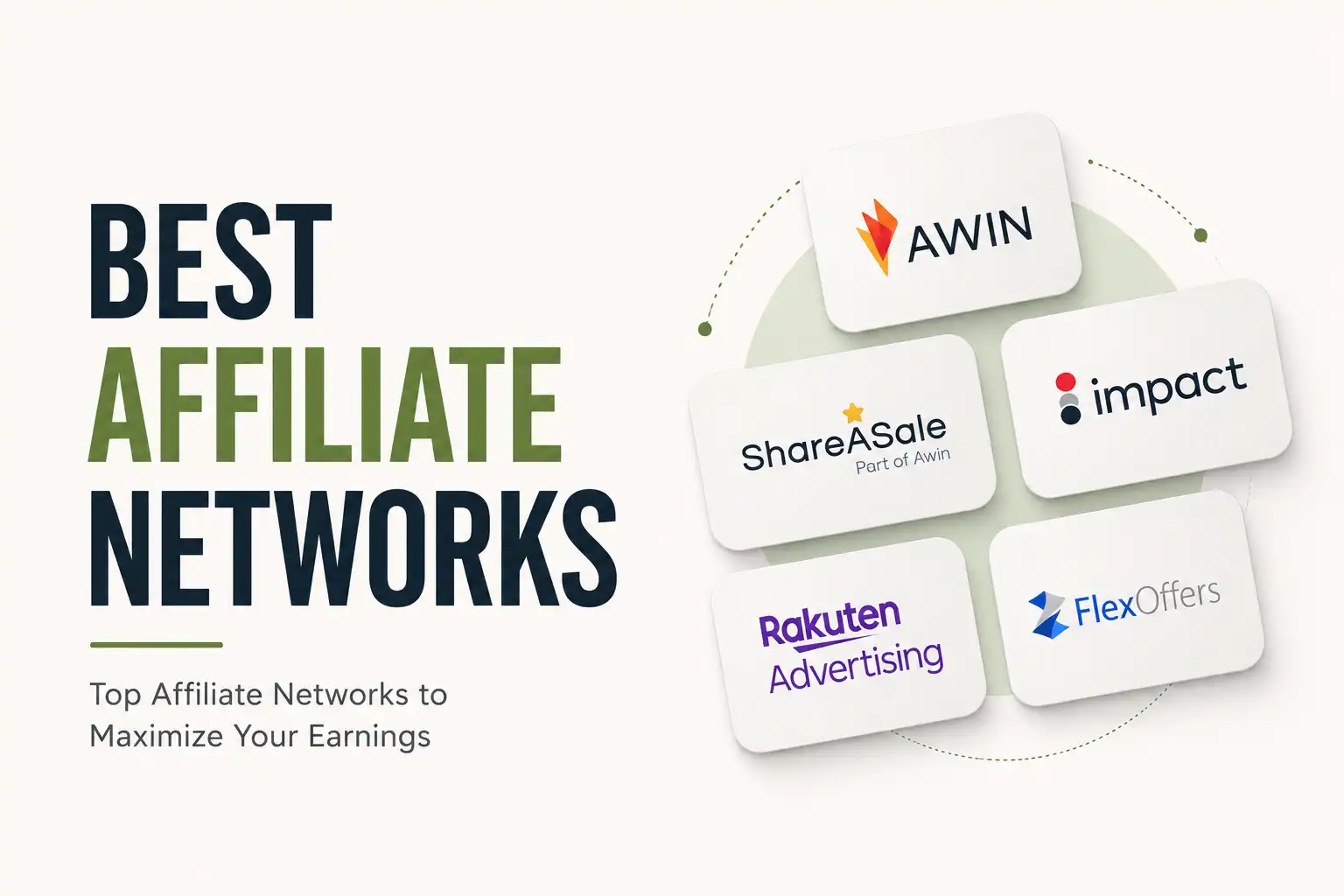
If you signed up for ShareASale before October 6, 2025, your account, your historical reports, and the network itself no longer exist as a standalone platform. Awin, which quietly acquired ShareASale back in 2017, fully absorbed it that day, moving more than 9,500 advertisers and 250,000 publishers into its own unified system.
On This Page 15 sections
Most “best affiliate networks” roundups still list ShareASale as an independent option. This one doesn’t, because it isn’t anymore, and getting details like that right is the entire point of a guide meant to actually be used rather than skimmed for a familiar list of names.
Key facts:
- ShareASale ceased operating as a standalone network on October 6, 2025, fully merged into Awin after an eight year transition since Awin’s 2017 acquisition.
- PartnerStack, the leading dedicated B2B SaaS affiliate network, was acquired by AppDirect on April 14, 2026.
- Awin now connects roughly 230,000 publishers with about 16,500 advertisers following its ShareASale consolidation, among the largest networks by publisher count.
- CJ Affiliate, founded in 1998 as Commission Junction, links over 3,800 global brands with more than 167,000 publishers.
- Amazon Associates, launched in July 1996, remains the most widely used individual program despite a short cookie window and comparatively low commission rates.
The Real Numbers, Side by Side
| Network | Founded | Scale | Best for |
|---|---|---|---|
| Impact | 2008 | 2,000+ brands, $100B+ in tracked commerce | Enterprise, multi touch attribution |
| CJ Affiliate | 1998 | 3,800+ brands, 167,000+ publishers | Established content publishers |
| Awin | 2017 (from 2000 era networks) | 16,500+ advertisers, 230,000+ publishers | EU and UK focused content |
| Rakuten Advertising | 1996 as LinkShare | 150,000+ publishers | Curated, brand safe partnerships |
| PartnerStack | 2015 | 500,000+ partners, B2B SaaS only | Software and subscription products |
| FlexOffers | 2008 | 12,000+ advertisers, 75,000+ publishers | Deal sites, sub affiliate management |
| ClickBank | 1998 | 21,000+ products, 200,000+ affiliates | Digital products, high commissions |
| MaxBounty | 2004 | 3,000+ active campaigns | CPA and lead generation |
| Amazon Associates | 1996 | Millions of products, 24 hour cookie | Content and review sites |
Founding dates and scale figures compiled from each network’s own published data and recent company history, current as of this article’s last update.
Impact: The Enterprise Choice
Impact, founded in 2008 and headquartered in Santa Barbara, has grown from a standard affiliate network into a broader partnership management platform, now processing more than $100 billion in tracked commerce across over 2,000 brands. Cofounder Todd Crawford had already helped build the affiliate industry once before, as a cofounder of Commission Junction, now CJ Affiliate, back in the late 1990s, a career arc spanning nearly the entire history of the modern affiliate industry across two of the networks covered in this guide, and one recognized with the industry’s own 2007 Affiliate Marketing Legend award. Named partners include Uber, Shopify, Airbnb, and Adidas.
Its real differentiator is multi touch attribution, crediting multiple partners across a customer’s journey rather than defaulting to last click only. That matters specifically for marketers working with influencers or content funnels where the click that closes the sale isn’t always the one that actually drove the decision.
Beyond Uber, Shopify, and Airbnb, Impact’s client roster also includes Microsoft, Canva, and Semrush, a mix that skews heavily toward software and subscription businesses rather than pure ecommerce retail. That focus explains why Impact shows up disproportionately often among B2B and SaaS marketers specifically, compared to CJ or Awin’s more retail heavy merchant base.
The tradeoff is complexity. Impact’s depth of configuration options makes it less approachable for a solo affiliate just starting out than a simpler network, though the platform genuinely rewards the learning curve for marketers managing several campaigns at once, particularly once fraud protection and dynamic commissioning start meaningfully affecting bottom line results.
CJ Affiliate: The Established Standard
CJ Affiliate began in 1998 as Commission Junction, merged with ValueClick in 2003, rebranded to Conversant in 2014, and now operates as a Publicis Groupe subsidiary under the CJ name. That 27 plus year history is longer than most competing networks, and it shows in the maturity of the platform.
CJ currently links more than 3,800 global brands with over 167,000 publishers across retail, travel, and finance. Advertisers on the platform go through real vetting rather than open self service listing, which keeps offer quality more consistent than networks that let any merchant list instantly. That vetting process is also part of why CJ’s average program tends to have clearer, better documented terms than what a fully open registration network typically provides.
Higher performing affiliates get access to dedicated account management and sometimes exclusive commission tiers not available to everyone, a real incentive to build volume on the platform rather than spreading traffic thin across competitors. CJ also offers deep linking and real time performance metrics as standard tools, features some newer, smaller networks still charge extra for or don’t offer at all.
Awin: Now the Consolidated Giant
Awin’s own history is a story of consolidation. It launched under that name on March 6, 2017, unifying Zanox and Affiliate Window, two networks both founded in 2000 that had operated separately since a 2010 merger. Then in October 2025, Awin absorbed ShareASale entirely, having acquired it back in 2017 and run it as a separate US brand for eight years before finally merging the platforms.
That consolidation makes Awin one of the largest networks by sheer reach today: roughly 230,000 publishers and 16,500 advertisers, spanning retail, finance, and personal services with particular strength in European and UK markets. Anyone who built a program specifically through ShareASale’s old dashboard now manages that same relationship through Awin’s platform instead.
Rakuten Advertising: The Curated Option
Rakuten Advertising traces back to LinkShare, founded in 1996 in New York City. Rakuten, the Japanese ecommerce company, acquired LinkShare in 2005 for $425 million in cash, rebranded it Rakuten Affiliate Network in 2014, then Rakuten Advertising in 2020, a network that as of August 2026 counts more than 150,000 publishers.
Rakuten runs a more curated model than open registration networks, prioritizing brand alignment over open access. That approach fits established retailers and travel brands that need consistent, editorially controlled placements more than it fits an affiliate just starting to build traffic from scratch.
Global reach is a genuine strength given Rakuten’s own international ecommerce footprint, with region specific campaigns available for marketers running traffic outside the US specifically. Its origins as LinkShare also mean it carries some of the industry’s longest running merchant relationships, with named early clients including J.C. Penney, American Express, and Dell dating back to the platform’s earliest years.
PartnerStack: The SaaS Specialist, Now Under New Ownership
PartnerStack, founded in Toronto in 2015, built its identity as the dedicated network for B2B SaaS affiliate and partner programs, working with named software companies including Evernote, Asana, and Intercom across a partner base exceeding 500,000. On April 14, 2026, PartnerStack was acquired by AppDirect, a development worth knowing about for anyone evaluating the platform’s long term direction right now.
Its focus remains recurring commission tracking tied to subscription billing, correctly attributing renewals and upgrades rather than just an initial sale, which fits the long, education heavy sales cycles common in software specifically. Whether AppDirect’s ownership changes that focus over time is the open question for existing PartnerStack affiliates to watch.
FlexOffers: Built for Scale and Sub Affiliates
FlexOffers, founded in Miami in 2008 by Alex Daskaloff, who still runs the company as CEO, connects more than 12,000 advertisers with over 75,000 publishers, driving a reported $5 billion plus in annual sales through the network. Its distinguishing feature is genuine sub affiliate support, letting a publisher recruit and manage their own network of smaller affiliates underneath a single master account.
That structure fits coupon portals, deal aggregators, and browser extension operators managing traffic across many smaller sources rather than a single content site, a genuinely different operational model than most competing networks are built around. Vertical coverage spans finance, subscriptions, ecommerce, and lead generation broadly enough that a marketer running campaigns across several unrelated niches can often consolidate into one FlexOffers account rather than juggling separate network logins.
ClickBank: The Digital Products Marketplace
ClickBank started in a San Diego garage in 1998, founded by Tim and Eileen Barber, and now runs out of Boise, Idaho, serving more than 6 million entrepreneurs across 190 countries. The marketplace lists over 21,000 active digital products, from online courses to software, with more than 200,000 active affiliates promoting them.
ClickBank has paid out more than $7.3 billion to affiliates over its lifetime, including over $300 million in 2024 alone. Registration is fast and largely open, which means real opportunity but also real variance in product quality, since vetting is lighter than on a curated network like CJ or Rakuten.
Commission rates are the platform’s standout feature. Most digital products pay 50% to 75% on initial sales, with some vendors whitelisting affiliates for rates up to 90%, figures that dwarf the low single digit percentages typical of physical retail programs like Amazon Associates or CJ’s retail advertisers.
The gravity score referenced above specifically counts how many unique affiliates made at least one sale of a given product over the trailing 12 weeks, weighted toward more recent activity, not total sales volume. An individual affiliate can never contribute more than 1 point to that score regardless of how many sales they personally generate, which makes it a genuine signal of broad market interest rather than one high volume promoter skewing the number.
MaxBounty: The CPA Specialist
MaxBounty, headquartered in Ottawa, Canada since its 2004 founding, runs over 3,000 active cost per action campaigns, paying out for specific actions like a lead form, an app install, or a signup rather than requiring a completed sale. It’s been ranked the top CPA network by Offervault, a widely referenced performance marketing directory.
Minimum payout sits at $100, processed weekly through PayPal, wire transfer, ACH, or check, faster than the monthly cycles common on larger content focused networks. That suits media buyers running paid traffic who need to reinvest earnings quickly rather than waiting a full month for a first payout.
MaxBounty assigns dedicated account managers to affiliates, a level of hands on support more common on curated networks than open CPA platforms, and offers advanced filtering by payout type, traffic source, and geography that lets an affiliate narrow thousands of campaigns down to the specific handful worth actually running.
Amazon Associates: Still the Default for Content Sites
Amazon Associates, launched July 1996, remains the most widely used individual affiliate program simply because of Amazon’s product catalog breadth and near universal brand trust among online shoppers. Signup and link generation take minutes, with no network intermediary or approval wait typical of the networks above.
The real tradeoffs are a notoriously short 24 hour cookie window and commission rates that run lower than most dedicated networks, generally in a low single digit range depending on category. Amazon’s high conversion rate, driven by that same brand trust, often offsets the lower percentage for well targeted, high intent traffic.
Network Scale, Compared Directly
Publisher count alone doesn’t determine which network is right for a given marketer, but it’s a genuinely useful proxy for how much competition exists for a given advertiser’s attention, and how deep the pool of potential traffic sources runs for an advertiser building a program.
Publisher or affiliate network size by platform, based on each company’s own published, currently stated figures.
How to Actually Decide Between Them
Scale and history matter less than fit for a specific business model. Working through these questions in order narrows the field faster than reading every network’s marketing page.
What are you actually selling or promoting?
Software specifically points toward PartnerStack, digital products point toward ClickBank, and general retail points toward Awin, CJ, or Rakuten depending on region.
How fast do you need to get paid?
MaxBounty’s weekly $100 minimum payout beats the monthly cycles common elsewhere, a real consideration for anyone running paid traffic and needing to reinvest quickly.
Do you need multi touch attribution or is last click fine?
Impact’s attribution tools matter specifically if your funnel involves multiple partners touching the same customer before conversion. A simple content site rarely needs that complexity.
Is your traffic regional?
Awin’s merchant base skews European and UK heavy, while Amazon Associates and ClickBank run strong globally regardless of where the traffic originates.
Do you manage sub affiliates or work solo?
FlexOffers’ sub affiliate tools exist specifically for operators managing a network of smaller publishers underneath their own account, not relevant to a solo content creator.
None of these networks operate in isolation from the underlying mechanics that make affiliate marketing work in the first place, the commission models, cookie attribution, and FTC disclosure rules covered in our full affiliate marketing guide. Understanding that foundation makes evaluating any specific network’s terms far faster.
The Industry Is Genuinely Consolidating
ShareASale folding into Awin and PartnerStack’s acquisition by AppDirect aren’t isolated events. Both fit a broader pattern of standalone affiliate networks getting absorbed into larger partnership platforms rather than staying independent, the same dynamic Awin’s own history already shows through its Zanox, Affiliate Window, and Commission Factory acquisitions.
For a marketer building on any of these platforms, that consolidation trend is worth factoring into long term planning specifically. A network’s current terms, dashboard, and support structure can change meaningfully after an acquisition, sometimes for the better with new tooling like the AI powered assistant Awin rolled out alongside the ShareASale migration, sometimes with real disruption during the transition itself, exactly what ShareASale merchants experienced through 2025.
None of this is a reason to avoid these platforms entirely, affiliate marketing overall keeps growing regardless of which specific network name sits on top of the underlying infrastructure at any given moment. It’s a reason to diversify across more than one network rather than building an entire revenue stream on a single platform’s continued independence, a risk covered from the merchant side in our piece on coupon distribution channels.
What Signing Up Actually Involves
Approval isn’t automatic on most of these networks, a detail worth setting expectations around before applying. Curated networks like CJ, Rakuten, and Impact typically review an applicant’s existing traffic, content quality, and audience relevance before granting access, and a brand new site with minimal traffic can genuinely get rejected on a first application rather than approved provisionally.
ClickBank, Amazon Associates, and MaxBounty run more open registration by comparison, approving most applicants quickly, though Amazon specifically requires 3 qualifying sales within 180 days of signup or the account gets closed, a window Amazon doubled from 90 days in 2024. That’s a real, often overlooked detail that catches new affiliates who sign up, generate a few links, and then let the account go dormant without checking the actual clock running against them.
Individual merchant programs within a network still require separate approval even after the network itself accepts an applicant. Getting into CJ Affiliate, for instance, doesn’t automatically grant access to every advertiser on the platform, each brand still reviews and approves affiliates individually based on its own criteria.
Cookie duration also varies meaningfully by network rather than being a fixed industry standard. Awin publishes each advertiser’s specific cookie window upfront before you join a program, a transparency practice worth checking for on any network you’re evaluating, since a 7 day window and a 90 day window represent genuinely different earning potential for the exact same underlying traffic.
That layered approval structure is also where competitive tension between affiliates for the same merchant relationship actually plays out, a dynamic covered in more depth in our piece on brand bidding in affiliate marketing.
Frequently Asked Questions
Is ShareASale still a separate affiliate network?
No, ShareASale ceased operating as a standalone platform on October 6, 2025. Awin, which had owned ShareASale since 2017, fully merged it into its own unified platform, moving more than 9,500 advertisers and 250,000 publishers over in the process.
What is the best affiliate network for beginners?
Amazon Associates and ClickBank both offer fast, largely open registration without the traffic history requirements that curated networks like CJ Affiliate or Rakuten typically expect. Amazon requires 3 qualifying sales within 180 days of signup to keep an account active, which is worth planning around from day one.
Which affiliate network is best for SaaS or software products?
PartnerStack is the dedicated network for B2B SaaS affiliate and partner programs, working with software companies like Evernote, Asana, and Intercom across more than 500,000 partners. It was acquired by AppDirect on April 14, 2026, worth knowing when evaluating its current direction.
How much does it cost to join an affiliate network as a publisher?
Joining as a publisher is free across every network covered here, including Impact, CJ Affiliate, Awin, Rakuten, PartnerStack, FlexOffers, ClickBank, MaxBounty, and Amazon Associates. Networks earn revenue from advertisers through setup fees and commission overrides, not from publisher signup fees, which is the standard business model across the entire affiliate industry.
What happened to PartnerStack?
PartnerStack, the leading dedicated B2B SaaS affiliate and partner network, was acquired by AppDirect on April 14, 2026. The platform continues operating, though its long term direction under new ownership is still an open question for existing affiliates and merchants.
Which affiliate network pays out the fastest?
MaxBounty pays weekly with a $100 minimum payout, faster than the monthly cycles common on most content focused networks like CJ Affiliate or Awin. That faster cycle suits media buyers running paid traffic who need to reinvest earnings quickly.