BIBA IPO and Real Financials: What the Statistics Actually Show
-
 Written by
Rajat Singh
Written by
Rajat Singh
- Published
- Updated
- Read time 15 min read
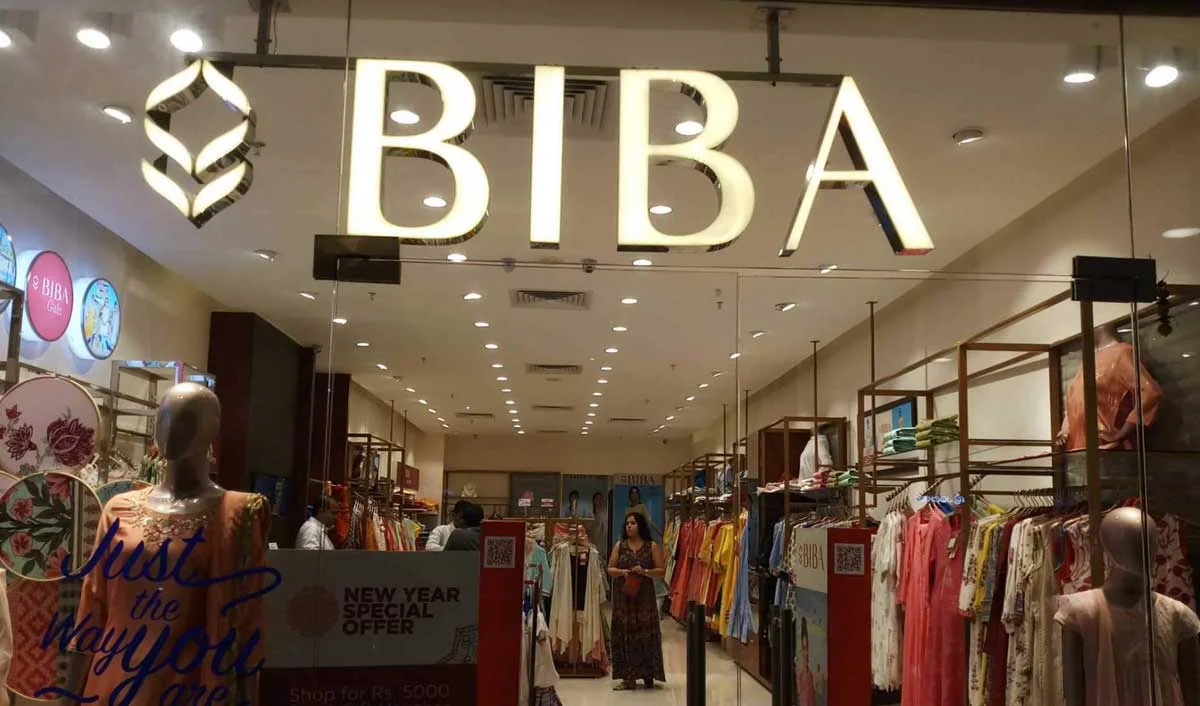
BIBA first tried to go public in 2022. That attempt opened a short window in May, then SEBI quietly put the whole offering in abeyance without disclosing why, and the company’s IPO plans went silent for nearly 4 years. In April 2026, BIBA filed fresh paperwork and tried again.
On This Page 10 sections
That 2 attempt IPO story is the single most important, current fact about BIBA right now, and it is not something most existing coverage of the brand has caught up to yet. This article covers BIBA’s real, audited financial trajectory, the difficult year that preceded the renewed filing, and what is genuinely verifiable about the company versus what most “statistics” roundups simply invent.
- BIBA filed for an IPO in April 2026, its second attempt after a first try in 2022 was placed in abeyance by SEBI, a fresh issue worth ₹90 crore plus an offer for sale of existing investor shares.
- Group revenue fell 13% to ₹758 crore in FY2024, with a ₹95.5 crore loss, driven by weak demand and a difficult SAP system rollout during peak season.
- FY2025 showed a real, if modest, recovery, revenue up nearly 4% to ₹783 crore, with operating margins improving 400 to 500 basis points through cost cuts.
- The store network actually shrank, from 456 exclusive outlets in March 2024 to 405 in March 2025, as the company closed loss making locations.
- India’s ethnic wear market itself is genuinely growing, valued at $25.72 billion in 2026 and projected to reach $37.62 billion by 2031, even as BIBA specifically struggled through its own difficult year.
From an ₹8,000 Loan to a Pending IPO
Meena Bindra founded BIBA in 1988 in Delhi, starting with a home based operation funded by an ₹8,000 bank loan. The business grew into an organized ethnicwear label over the following 2 decades, eventually attracting outside capital as it scaled.
Warburg Pincus and Faering Capital invested roughly ₹300 crore for a combined 30% stake in 2013, a real, dated transaction that marked BIBA’s shift from a founder run business into an institutionally backed company. That same investor base is now part of the offer for sale in the renewed IPO filing.
BIBA’s first attempt at going public moved fast and then stalled. Preliminary papers were filed with SEBI in April 2022, an offer window was scheduled for May 24 to 26 that year, and then SEBI placed the entire IPO in abeyance as of August 2022 without publicly stating a reason.
The April 2026 filing revived that stalled process. The renewed offer combines a fresh issue of equity shares worth ₹90 crore with an offer for sale of roughly 2.77 crore existing shares from the promoter group and existing investors, figures reported consistently across the majority of coverage, though 1 earlier report cited a considerably larger fresh issue figure that appears to be a units error rather than a genuine second version of the offer. Net proceeds from the fresh issue are earmarked mainly for repaying existing borrowings, with the remainder going toward general corporate purposes.
The company behind the filing, BIBA Fashion Limited, was incorporated in 2002 as the formal corporate structure around a business Meena Bindra had already been running for 14 years by that point. The DRHP names Siddharth Bindra, Meena Bindra, and Shradha Bindra as individual promoters, alongside 2 promoter entities, Kaveri Tradex Private Limited and Dhanvan Impex LLP.
An offer for sale specifically does not raise new money for the company itself, since it is existing shareholders selling their own shares to the public rather than the company issuing new stock. Only the fresh issue portion actually brings new capital into BIBA, which is the part earmarked for debt repayment and general corporate purposes.
JM Financial, Ambit, DAM Capital, Equirus Capital, and HSBC Securities are named as the book running lead managers handling the offer, the banks responsible for pricing the issue and coordinating the actual sale to investors once the process clears its remaining regulatory steps.
BIBA has received in principle approval from both the BSE and the NSE to list its shares, the standard dual listing route most large Indian consumer IPOs take. On the selling shareholder side, Warburg Pincus, Faering Capital, and founder Meena Bindra herself are all named participants in the offer for sale portion, trimming their existing stakes rather than exiting the company entirely.
The Real Revenue Trajectory, Not a Straight Growth Line
BIBA Group’s revenue actually fell 13% to ₹758 crore in FY2024, down from approximately ₹872 crore the year before. The company swung from a ₹53 crore profit in FY2023 to a ₹95.5 crore loss in FY2024, with operating profit margin collapsing from roughly 21% to about 7% over the same period.
2 specific, named causes drove that decline according to ICRA’s own credit rating commentary: softer market demand across the fashion retail category generally, and operational disruption from implementing a new SAP system during peak season, which alone cost an estimated ₹50 crore in lost revenue.
| Metric | FY2023 | FY2024 | FY2025 |
|---|---|---|---|
| Group revenue | ~₹872 Cr | ₹758 Cr | ₹783 Cr |
| Profit or loss | ₹53 Cr profit | ₹95.5 Cr loss | Margin improved 400 to 500 bps |
| Operating margin | ~21% | ~7% | Recovering |
| Exclusive stores (EBOs) | Not disclosed | 456 (Mar 2024) | 405 (Mar 2025) |
Compiled from ICRA credit rating reports and business press coverage of BIBA Group’s audited results, FY2023 through FY2025.
BIBA Group revenue, FY2023 through FY2025, compiled from ICRA credit rating reports.
FY2025 showed a genuine, if modest, recovery. Revenue grew nearly 4% to ₹783 crore, and operating margins improved 400 to 500 basis points, driven by cost rationalization, employee cost optimization, reduced overheads, and closing stores that were not profitable.
ICRA’s own rating actions tell a more cautious story than the revenue recovery alone suggests though. The company’s long term rating was downgraded with its outlook revised to Stable in December 2024, downgraded again with a Negative outlook in August 2025, and downgraded a further time in May 2026, still carrying that Negative outlook as of this writing.
The Store Network Actually Shrank
BIBA’s exclusive brand outlet count fell from 456 as of March 2024 to 405 as of March 2025, alongside a decline in multi brand outlet presence from over 700 to over 600 in the same window. That is a real, net contraction, not the steady expansion most brand statistics roundups assume by default.
Closing loss making stores was an explicit, stated part of the FY2025 margin recovery strategy rather than a sign of retreat from the category. Inventory also fell meaningfully over the same period, from ₹416 crore in March 2024 to ₹346 crore by November 2024, consistent with a deliberate destocking effort during the turnaround.
The exclusive brand outlets and multi brand outlets aren’t BIBA’s only shelf space. The brand also sells through large format department stores, including shop in shop counters inside Shoppers Stop and Lifestyle, which extend BIBA’s physical reach into cities where a standalone store wouldn’t be viable on its own.
Online, BIBA lists on Myntra, Ajio and Amazon Fashion in addition to its own biba.in storefront, the same multi channel pattern most large Indian apparel brands now run rather than betting everything on a single direct to consumer site. That marketplace presence is also where a meaningful share of festive season volume actually lands, given how much ethnic wear shopping in India has shifted onto marketplace apps during Diwali and wedding season specifically.
Rangriti and the Push Beyond a Single Brand
The BIBA brand itself has represented a declining share of group revenue over time, down to roughly 87% in FY2025 from 94% in FY2016, as the group’s economy focused Rangriti brand has expanded specifically to diversify beyond BIBA’s own mid premium positioning. Rangriti launched around 2014 as BIBA’s fast fashion arm, scaled to 50 stores within its first 3 years, and has grown to more than 70 stores nationwide today.
That diversification matters directly for anyone reading BIBA’s headline revenue figures, since an increasing share of that group total now comes from a genuinely different price tier and customer base than the BIBA branded stores most shoppers actually recognize.
A Mother Founded It, Her Son Now Runs It
Siddharth Bindra, Meena Bindra’s son, serves as BIBA’s Managing Director, a real generational handover from the founder who started the business with an ₹8,000 loan. That succession is a genuine, verifiable detail worth noting given how often founder led Indian retail brands struggle with exactly this transition.
Manufacturing sits with Kashida Apparels, a BIBA group subsidiary incorporated in June 2022 specifically to house in house production capacity, reported at close to 1.89 million garments a year. Owning that manufacturing capacity directly, rather than relying entirely on third party contract manufacturers, gives BIBA more control over lead times heading into festive season demand spikes than a brand without its own factory base would have.
The product range itself has stayed narrow and consistent rather than sprawling into unrelated categories, which is part of why the brand is still instantly recognisable after nearly four decades. The core lineup is kurtas, kurta sets, Anarkali suits and sharara sets, sold alongside a dedicated Wedding Edit collection covering heavier lehengas and occasion wear for the Indian wedding season.
BIBA also runs BIBA Girls, a kidswear line extending the same ethnic silhouettes down to younger sizes, plus a smaller fusion wear category mixing Indian cuts with Western fabrics and fits. None of this is a guess dressed up as data. It is simply what the brand actually sells, without attaching invented revenue share percentages to each category the way some older coverage of BIBA has done.
How BIBA Compares to Its Real Competitors
BIBA sits among a small group of organized Indian ethnicwear brands, and the ones with disclosed financials tell a genuinely mixed story about the category, not a uniform growth trend.
| Brand | Founded | Recent Revenue |
|---|---|---|
| BIBA | 1988 | ₹783 Cr (FY2025) |
| Fabindia | 1960 | ₹1,309.5 Cr (FY2025), up ~5% |
| W for Woman | 2001 | Not separately disclosed |
| Aurelia | 2009 | Not separately disclosed |
Fabindia figure from its own FY2025 annual results. W and Aurelia are both owned within larger corporate groups and do not report standalone revenue.
Fabindia, the oldest brand of the group, posted real revenue growth in the same period BIBA was recovering from a loss, and at close to double BIBA’s own revenue. W for Woman pioneered the mix and match kurta and bottom concept BIBA itself now competes on directly, while Aurelia, founded by the same Pasricha family behind W, targets a similar affordable, everyday ethnicwear segment.
Both W and Aurelia sit inside larger corporate structures, W and Aurelia’s parent TCNS having been absorbed into Aditya Birla Fashion and Retail’s portfolio, which is exactly why neither publishes a standalone revenue figure the way BIBA and Fabindia do as more independently structured companies.
The Broader Ethnic Wear Market Is Genuinely Growing
India’s ethnic wear market was valued at $25.72 billion in 2026 and is projected to reach $37.62 billion by 2031, a 7.9% compound annual growth rate. Women account for over 70% of that market, and kurtas and kurtis specifically are the fastest growing segment within it, driven by demand for versatile pieces that work for office wear as well as festive occasions.
That category level growth sits in real tension with BIBA’s own difficult FY2024, which is itself a more interesting and more honest story than a simple growth narrative would be. A well positioned brand in a genuinely growing category can still have a bad year from operational missteps, and BIBA’s SAP rollout problems are a clear example of that distinction.
Industry estimates put the unorganised share of India’s ethnic wear market at roughly 80 to 85%, with local tailors and unbranded sellers still dominating volume even as branded players grow faster. That leaves organised, branded retail at only around 15 to 20% of the total category, which is the specific space BIBA actually competes in rather than the market as a whole.
For the full category level picture, wedding season spending, saree specific data, the ecommerce channel split, and how the wider textile industry connects to it, our ethnic wear market statistics covers the sector in depth. This article stays focused specifically on BIBA the company.
The Online Business Is Real but Small Relative to Retail
BIBA’s own online store, biba.in, generated an estimated $19 million in 2025 according to ecommerceDB’s retailer analytics, projected to grow only 0% to 5% in 2026. Set against a group that reported ₹783 crore in total FY2025 revenue, roughly $94 million at typical exchange rates, the owned ecommerce channel represents a real but genuinely minority share of the overall business.
About 51% of biba.in’s own tracked revenue came from India specifically, per the same analytics source, meaning close to half of the direct online store’s business already comes from outside the country. That international share reflects genuine demand from the Indian diaspora, a real customer base that domestic focused competitors without an international shipping option do not capture at all.
That gap matters for how BIBA’s turnaround actually plays out. Store closures and offline cost discipline, not a shift toward digital, appear to be doing most of the real work in the FY2025 margin recovery, consistent with a brand that remains genuinely retail led rather than one pivoting toward ecommerce as its primary growth engine.
Management has reportedly set a target of 15% to 20% annual growth for FY2026, citing a broader revival in ethnic wear demand across the category. That target sits well above the roughly 4% growth actually delivered in FY2025, making it a genuinely ambitious goal against the company’s own recent track record rather than a conservative extrapolation of the current trend.
What This Actually Means for Shoppers
The inventory reduction covered above, from ₹416 crore in March 2024 down to ₹346 crore by that November, is exactly the kind of deliberate destocking that tends to show up as deeper end of season sale discounts on the retail floor. A company actively working down inventory has a real, structural reason to discount harder than one holding stock at a steady level.
The net store closures between March 2024 and March 2025 also carry a practical, immediate implication: a specific BIBA location a shopper used to visit regularly may simply no longer exist, making it worth checking store availability before planning a trip rather than assuming a previously known location is still open.
None of this changes the product itself. BIBA’s kurta sets and festive occasion wear remain positioned in the same mid premium tier they always have, and the company’s operational and financial story sits mostly behind the scenes of an ordinary purchase, worth understanding for context rather than something a shopper needs to factor into a single transaction.
The destocking pattern also means active coupon codes and end of season markdowns are more likely to appear right now than during a normal inventory cycle. Checking our BIBA coupon page before a purchase is a genuinely useful habit given that specific backdrop, rather than a generic suggestion that applies to every retailer regardless of context.
Frequently Asked Questions
Is BIBA going public?
Yes, BIBA filed for an IPO in April 2026, its second attempt after a first try in 2022 was placed in regulatory abeyance by SEBI. The renewed offer consists of a ₹90 crore fresh issue plus an offer for sale of roughly 2.77 crore existing shares, with final pricing and listing dates still pending as of this writing.
What is BIBA’s actual revenue?
BIBA Group’s revenue was ₹758 crore in FY2024, down 13% from roughly ₹872 crore the year before, followed by a recovery to ₹783 crore in FY2025. These figures come from ICRA credit rating reports and cover the full BIBA Group, not the BIBA brand alone.
Why did BIBA report a loss in FY2024?
Softer market demand across fashion retail combined with operational disruption from implementing a new SAP system during peak season, which alone cost an estimated ₹50 crore in lost revenue. The company swung from a ₹53 crore profit in FY2023 to a ₹95.5 crore loss in FY2024 as a result.
How many BIBA stores are there?
405 exclusive brand outlets as of March 2025, down from 456 the year before, alongside over 600 multi brand outlet listings. That net reduction reflects a deliberate closure of loss making stores as part of the company’s margin recovery plan.
Who founded BIBA?
Meena Bindra founded BIBA in 1988 in Delhi with an ₹8,000 bank loan, starting as a home based business before growing into an organized ethnicwear label. Warburg Pincus and Faering Capital later invested roughly ₹300 crore for a combined 30% stake in 2013.
What is Rangriti’s relationship to BIBA?
Rangriti is an economy focused sister brand within the same group, aimed at a different price tier than BIBA’s mid premium positioning. Its expansion is why the BIBA brand itself now represents roughly 87% of group revenue, down from 94% in FY2016.