




How to Shop Western Wear Without Overspending
A garbage truck of textiles gets landfilled or burned somewhere in the world every single second. That’s not a reason…
Ranked by offers live right now.
Stores whose offers changed most recently.
 Tokyocanvas
 Coofandy
 Zapaka
 Wedtrend
 Vero Moda
 Lysse
Lysse
 Chicme
 Saadaa
 Pant Project
 The Bear House
 Uniqlo
 Amazon
 Nykaa Fashion
 Cahoot
 BloomChic
 Pepe Jeans
 FYVA
FYVA
 Allegra K
 De Novoo
 Linen Club
 Outcast
 Littlebox India
 SPLITS59
 Snitch
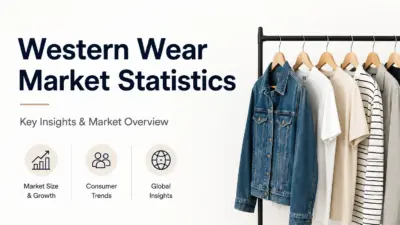
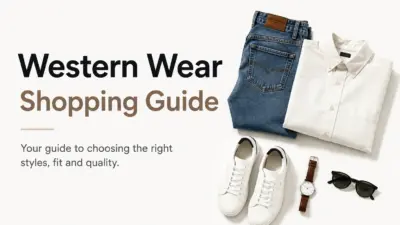
Western wear covers everyday clothing built in Western fashion traditions, including denim, casual shirts, t shirts, dresses, jackets, and trousers. It is distinct from the Ethnic Wear category on this site, which covers traditional regional clothing styles. Western wear is the broadest apparel category most shoppers browse regularly, spanning casual basics through to going out and formal pieces.
This is a genuinely large market. Industry research estimates the global western wear market at well over eighty billion dollars, with casual styles making up the clear majority of that spending. Denim, oversized fits, and comfort driven silhouettes have become the dominant look across most age groups.
Because this category covers so many garment types, price points, and fit considerations, it is worth understanding how the pieces differ before comparing options. This guide breaks down the main subtypes, what genuinely drives clothing prices, how to judge real quality, fit and sizing pitfalls, and the seasonal patterns worth knowing before you shop.
Western wear spans a wide range of garment types, each with its own typical fabric, construction standard, and price range.
| Subtype | Common fabrics | Typical use |
|---|---|---|
| Denim and jeans | Cotton denim, stretch blends | Everyday casual wear |
| Casual tops and t shirts | Cotton, cotton blends, jersey knit | Daily wear, layering |
| Dresses and skirts | Cotton, viscose, polyester blends | Casual to semi formal occasions |
| Jackets and outerwear | Denim, leather, wool blends, nylon | Seasonal layering, weather protection |
| Formal and workwear separates | Wool blends, structured cotton twill | Office and formal settings |
| Athleisure and activewear crossover | Synthetic performance blends | Casual comfort, light activity |
Casual western wear dominates this category by a wide margin, reflecting the shift toward comfort driven dressing that has continued across recent years. Denim remains one of the single most consistently purchased pieces within the category, cutting across nearly every subtype from jackets to dresses to trousers.
Within menswear and womenswear, the category further splits into fairly distinct shopping patterns. Menswear tends to center on a smaller rotation of core staples, such as jeans, t shirts, and button up shirts, purchased fairly consistently throughout the year. Womenswear typically spans a wider range of silhouettes and styles, including dresses and skirts that shift more with seasonal trend cycles.
Footwear that is specifically paired with western wear outfits, such as casual sneakers, boots, and sandals, is generally treated as its own category on most retail sites and is not included in the apparel subtypes above, though it is worth factoring into the total cost of putting together a complete outfit.
Clothing pricing comes down to a fairly consistent set of underlying cost drivers, even though the final price tag can vary enormously between brands selling visually similar pieces.
Fabric is typically the single largest cost component in a garment, commonly making up around sixty percent of total production cost according to apparel industry cost breakdowns. A heavier weight, higher quality cotton or blend costs meaningfully more to source than thinner, lower grade synthetic fabric, and that difference shows up directly in retail price.
Labor and construction quality is the next major factor, generally accounting for roughly a third of production cost. Reinforced seams, proper hemming, and careful finishing all require more skilled labor time than the minimal construction used in the cheapest mass produced pieces.
Rare or specialty fibers push prices up significantly further. Fibers like cashmere or high grade wool can cost many times more per unit than standard cotton or polyester, which is why pieces blending in even a small percentage of a premium fiber often carry a noticeably higher price than an all synthetic equivalent.
Brand markup and retail overhead account for the remaining spread, and this is where price differences between visually similar garments are often largest, since brand positioning and marketing spend do not necessarily correlate with construction quality.
Fabric composition and construction details tell you far more about a garment's real quality than the price tag or brand name alone.
Check the fabric content label first. A higher percentage of natural fiber, such as cotton or wool, generally indicates a more breathable and longer lasting garment than one made mostly from polyester or acrylic, though performance blends do have legitimate uses for specific activities.
Look closely at seam construction, since this is one of the clearest visible signs of build quality. Double stitched seams, especially at stress points like pockets, inseams, and shoulder joints, tend to hold up far longer than single stitched, unfinished edges that fray quickly with regular wear and washing.
Fabric weight matters as well, and heavier fabrics generally hold their shape better across repeated wears than thin, lightweight material that stretches out or becomes see through after a handful of washes.
Color fastness is worth checking too, since precisely applied dyes hold their color through washing far better than cheaply applied dye that fades or bleeds within the first few wears.
Hardware quality is another practical detail often overlooked. Zippers, buttons, and rivets made from sturdier metal tend to outlast the flimsier plastic or thin metal hardware commonly used on lower cost garments, and a failed zipper or missing button is often what ends a garment's usable life well before the fabric itself wears out.
Lining quality matters for jackets and structured pieces as well. A fully lined jacket generally holds its shape and drapes better over time than an unlined equivalent, though it also typically costs more due to the extra fabric and construction labor involved.
The cost per wear of a garment often tells a very different story than its sticker price, and this is worth thinking through before defaulting to the cheapest option available.
A very low cost garment that only survives a handful of wears before losing its shape, fading, or developing holes at the seams can end up costing more per wear than a moderately priced piece built to last several years of regular use. Consumer research increasingly shows shoppers becoming more aware of this tradeoff, with many buyers now purchasing fewer items overall but spending more per piece.
This does not mean the most expensive option is always the best value either, since brand markup does not always track with actual construction quality. The more reliable approach is checking fabric content and construction details directly rather than assuming price alone signals durability.
Sizing inconsistency remains one of the most common frustrations in western wear shopping, since sizing standards are not consistent across brands or even across product lines within the same brand.
Always check a brand's specific size chart rather than assuming your usual size will translate directly, particularly when shopping online across multiple brands. Body measurements in inches or centimeters are a far more reliable guide than a generic size label.
Fabric composition also affects fit over time. Garments with added stretch fibers like elastane tend to loosen slightly with wear, while pure cotton or denim without stretch holds its original shape more consistently but may feel stiffer initially.
Reading recent customer reviews that specifically mention fit, such as whether a piece runs small or large relative to the size chart, is often more useful than the size chart alone, since it reflects real world experience across different body types.
Western wear pricing follows a fairly predictable seasonal rhythm tied to fashion cycles and clearance periods.
End of season clearance sales, typically occurring as retailers transition their floor sets for the next season, tend to offer the deepest discounts on current season pieces. Outerwear and jackets in particular often see significant markdowns in early spring as winter stock clears.
Major shopping periods in the fourth quarter of the year also bring wide discounting across nearly every subtype, though inventory selection can be picked over by the time the deepest discounts appear. Buyers willing to shop slightly out of season, such as buying summer pieces in early spring before peak demand, can often find better value than shopping at the height of a season.
A handful of recurring mistakes account for a large share of buyer's remorse in this category.
Buying based on a product photo alone without checking the fabric content label is a frequent mistake, since a garment can look identical to a higher quality piece in a photo while being made from a much thinner or lower grade material.
Ignoring care instructions before purchase is another common issue, particularly with pieces requiring dry cleaning or hand washing, which adds meaningful ongoing cost and effort that buyers do not always account for at the time of purchase.
Overbuying trend driven pieces that fall out of style quickly is also common, especially with fast moving casual trends, and tends to produce a closet full of barely worn items rather than a smaller set of pieces that get regular use.
Skipping a return policy check before ordering online is a mistake that becomes obvious only after a poor fit arrives, since return windows and conditions vary significantly between retailers, especially for sale priced items.
Several genuine shifts are underway in western wear based on recent industry tracking. Casual, comfort driven pieces continue to dominate the broader category, a shift that industry researchers link partly to continued hybrid work patterns and more relaxed workplace dress norms compared to prior years.
Athleisure influenced pieces, blending activewear fabrics and silhouettes into everyday casual wear, continue to grow as a crossover subtype rather than staying confined to dedicated activewear lines. Online retail has become the dominant distribution channel for the category overall, reflecting continued growth in digital apparel shopping relative to physical retail.
There is also a visible, if gradual, shift among some shoppers toward buying fewer, higher quality pieces rather than large volumes of low cost fast fashion, driven partly by growing awareness of the real cost per wear difference between the two approaches.
Before buying western wear, it helps to run through a short checklist rather than deciding purely on price or photos.
Check the fabric content label and compare it against what the garment is meant to be used for, since a fabric well suited to daily wear differs from one suited only to occasional light use. Look at seam construction and stitching density wherever product photos allow a close view.
Confirm your measurements against the specific brand's size chart rather than assuming a familiar size label will fit the same way. Read recent reviews for fit and durability feedback rather than relying only on the product description.
Check the retailer's return policy before ordering, particularly for online purchases where trying an item on beforehand is not possible. Finally, think about cost per wear rather than sticker price alone, since a slightly higher upfront cost on a well constructed piece often works out cheaper over the life of the garment than repeatedly replacing lower quality alternatives.
How a garment is washed and stored has a real effect on how long it lasts, often as much impact as the original construction quality.
Washing denim and structured pieces less frequently, inside out, and in cold water generally preserves color and shape far longer than frequent hot washing. Air drying rather than machine drying on high heat also reduces shrinkage and fiber breakdown over repeated wash cycles for most fabric types.
Storing knitwear folded rather than hung prevents stretching at the shoulders, while structured jackets generally benefit from being hung on a proper shaped hanger rather than a thin wire one. These habits cost nothing extra but meaningfully extend how long a garment stays in good, wearable condition.
A garbage truck of textiles gets landfilled or burned somewhere in the world every single second. That’s not a reason…
In May 2025, one of India’s largest fashion conglomerates split itself in two, specifically along the line between western wear…