



























Ethnic Wear Coupons: 18 Verified Brands | Sep 2026
Ethnic wear covers traditional and regionally rooted clothing, most commonly associated with Indian fashion, spanning sarees, kurtas, lehengas, and sherwanis alongside newer fusion styles that blend traditional silhouettes with contemporary cuts. This category sits apart from western wear both in occasion and in how it is shopped, since a large share of ethnic wear purchases are tied to specific festivals, weddings, or cultural events rather than everyday rotation.
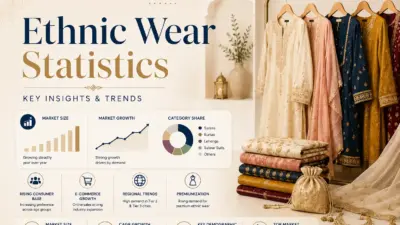
Industry estimates place the Indian ethnic wear market at roughly 21 to 23 billion dollars in 2026, with projections pointing toward continued growth through the early 2030s as more of the category moves online. IBEF has separately reported the women's ethnic wear segment alone at around 1.68 trillion rupees for a recent fiscal year, underlining how large the women's side of this category is relative to menswear.
What makes ethnic wear distinct as a shopping category is the range within it. A cotton kurta for daily wear and a heavily embroidered bridal lehenga both fall under the same broad label, but they differ enormously in price, fabric, and how a buyer should evaluate quality. The sections below break down the main garment types, what actually drives price, and what to check before buying, particularly for occasion wear.
The category also spans a wide range of retailer types, from large ecommerce marketplaces carrying dozens of brands to standalone labels focused on a single regional style or price segment. Some retailers specialize almost entirely in bridal and wedding wear, while others focus on everyday cotton kurtas and casual fusion pieces meant for daily rotation. Understanding which type of retailer a specific brand represents helps set realistic expectations for pricing, sizing consistency, and how customizable a garment might be.
What This Category Includes
Ethnic wear spans several distinct garment categories, each tied to different occasions and price expectations. The table below summarizes the most common types found across Indian ethnic wear retailers.
| Garment type | Typical occasion | Common fabrics |
|---|---|---|
| Saree | Formal events, festivals, daily wear depending on fabric | Cotton, silk, georgette, chiffon |
| Kurta and kurti sets | Daily wear, casual and semi formal occasions | Cotton, rayon, linen |
| Lehenga and ghagra choli | Weddings, festive celebrations | Silk, velvet, net, georgette |
| Sherwani and kurta pajama | Weddings and formal menswear occasions | Silk, brocade, cotton blends |
| Indo western fusion wear | Semi formal and contemporary celebrations | Mixed fabrics combining traditional and western cuts |
Accessories like dupattas, stoles, and matching jewelry sets are frequently sold alongside these core garments, either bundled as a full outfit set or listed separately. Buyers shopping for a specific occasion often need to budget for these additions on top of the base garment price.
Regional styles add another layer of variety within each garment type. A Bengali style saree drape, a South Indian silk saree, and a Gujarati style ghagra choli all fall under the same broad garment categories but carry distinct regional identities in fabric, motif, and construction. Buyers researching a specific regional style are usually better served searching for that regional term directly rather than relying on generic category browsing alone.
What Drives Price
Fabric type is the single biggest price driver in ethnic wear. Pure silk and handwoven fabrics command significantly higher prices than synthetic blends like polyester or rayon, both because of raw material cost and the labor involved in traditional weaving techniques.
Handwork and embroidery add substantial cost on top of the base fabric. Zari work, mirror work, and hand embroidery are typically priced by the density and complexity of the pattern, which is why two lehengas in similar fabric can differ sharply in price based on how much handwork covers the garment.
Designer labels and limited production runs also push prices up independent of material cost, similar to how branding works in western fashion. A mass produced kurta set and a designer labeled version in comparable fabric can carry a meaningfully different price simply due to brand positioning and limited availability.
Customization and tailoring add a further cost layer for garments like sherwanis and unstitched sarees requiring a blouse to be made separately. Made to measure options generally cost more than standard sizing, but they also reduce the risk of poor fit for occasion wear where alterations under time pressure can be difficult to arrange.
Production method is a final, less obvious factor. Genuinely handwoven textiles take considerably longer to produce than machine woven equivalents, and that labor difference shows up directly in the final price even when two fabrics look similar to an untrained eye in a product photo.
How to Evaluate Genuine Value
Check the fabric composition listed on the product page rather than relying on descriptive terms like "silk look" or "premium fabric," which often signal a synthetic blend rather than the genuine material. Actual silk, cotton, or linen content should be stated as a percentage where possible.
For handloom or heritage weave claims, such as Banarasi, Chanderi, or Kanjeevaram, look for a Geographical Indication tag or clear sourcing information. These traditional weaves carry regional certification in many cases, and genuine pieces are usually described with enough specificity to distinguish them from machine made imitations sold under the same regional name.
Stitching quality matters more in ethnic wear than in many other clothing categories because of the layered construction common in lehengas, sarees with stitched blouses, and heavily embellished pieces. Reviews that mention how a garment held up after wear, rather than only its appearance in photos, tend to be more reliable indicators of construction quality.
Color accuracy between product photos and the actual garment is another common evaluation point, particularly for jewel tones and metallic shades common in festive wear that can render differently across screens and lighting. Sellers that provide multiple photos in different lighting, or a fabric swatch option for higher value pieces, generally give a more accurate sense of the true color than a single studio shot.
Seasonal and Timing Patterns
Ethnic wear demand is heavily concentrated around India's festival and wedding calendar. Navratri, Diwali, and regional New Year celebrations each drive distinct spikes in demand, often for different garment types depending on the specific festival's traditions.
Wedding season, which typically runs across a few concentrated windows through the year based on auspicious dates, drives the highest value purchases in this category, including bridal lehengas and formal menswear. Because shipping and tailoring timelines can extend during these peak periods, buyers shopping for a specific wedding date often need to order well ahead of the event rather than close to it.
Outside India, ethnic wear demand among diaspora communities tends to cluster around the same festival calendar, though shipping timelines from India based sellers to international addresses require additional buffer time that is easy to underestimate.
Common Mistakes to Avoid
Sizing is one of the most common sources of frustration in this category, since ethnic wear sizing is far less standardized across brands than western wear. A size medium in one brand's kurta set can differ noticeably from a medium in another, so checking a brand's specific measurement chart matters more than relying on a familiar size label.
Fabric care is another frequent misstep. Many ethnic wear fabrics, particularly silk, georgette, and heavily embellished pieces, require dry cleaning rather than home washing, and treating them like everyday cotton garments can damage both the fabric and any handwork.
Ordering occasion wear too close to the event date is a third common mistake, especially for pieces that require alteration or come from sellers with longer processing times during peak festival or wedding season. Building in extra time for potential exchanges or alterations avoids last minute stress before a major event.
Real Trends Shaping the Category
Online penetration of ethnic wear has grown steadily as more shoppers, both within India and among the diaspora abroad, become comfortable buying occasion wear without trying it on in person first. This shift has been supported by more detailed sizing charts, video content, and more generous return policies from established ethnic wear retailers.
Fusion and Indo western styles have also expanded as a distinct segment, appealing to buyers who want a traditional silhouette with a more contemporary cut or styling. This trend sits alongside continued strong demand for classic, unmodified traditional garments, rather than replacing it.
There has also been renewed interest in handloom and heritage weaves, partly driven by broader interest in sustainable and traditionally produced textiles over fast fashion alternatives. Several industry reports link this to younger buyers specifically seeking out authentic regional weaves for milestone occasions like weddings, rather than opting for mass produced alternatives.
Rental and resale options have also emerged as a meaningful trend within occasion wear specifically, since bridal lehengas and heavily embellished pieces are often worn only once or twice. This has not displaced traditional buying, but it has added an alternative path for buyers who want a premium piece for a single event without the full purchase cost.
Men's ethnic wear has also seen steady growth as a distinct segment, moving beyond wedding season alone into festive and semi formal occasions throughout the year. This has broadened the range of sherwani and kurta pajama styles available at different price points, where the segment was previously more narrowly focused on formal wedding attire.
Practical Buying Guide
Identify the occasion first, since that determines both the appropriate garment type and a realistic budget range. Daily wear kurtas, festive sarees, and bridal lehengas sit at very different price points, and shopping without that context tends to lead to comparing garments that are not actually equivalent.
Check the brand's specific size chart rather than assuming standard sizing, confirm fabric composition and care instructions, and verify the return or exchange policy given how much sizing can vary. For occasion wear tied to a specific date, order with enough buffer time for potential exchanges, alterations, or shipping delays during peak festival and wedding periods.
When ordering a full outfit set involving multiple pieces such as a blouse, dupatta, and skirt, check whether each component is separately sized or sold only as a fixed set. Some retailers allow mixing sizes across pieces within one outfit, which can matter for buyers whose measurements do not fall neatly into a single standard size across the top and bottom of an outfit.
Finally, keep packaging and initial creasing in mind when a garment first arrives, particularly for silk and heavily pleated pieces like sarees. A few minutes of light steaming often resolves shipping creases that can otherwise make a well made garment look lower quality than it actually is straight out of the packaging.
