How to Build a Skincare Routine Without Overspending
-
 Written by
Rajat Singh
Written by
Rajat Singh
- Published
- Read time 14 min read
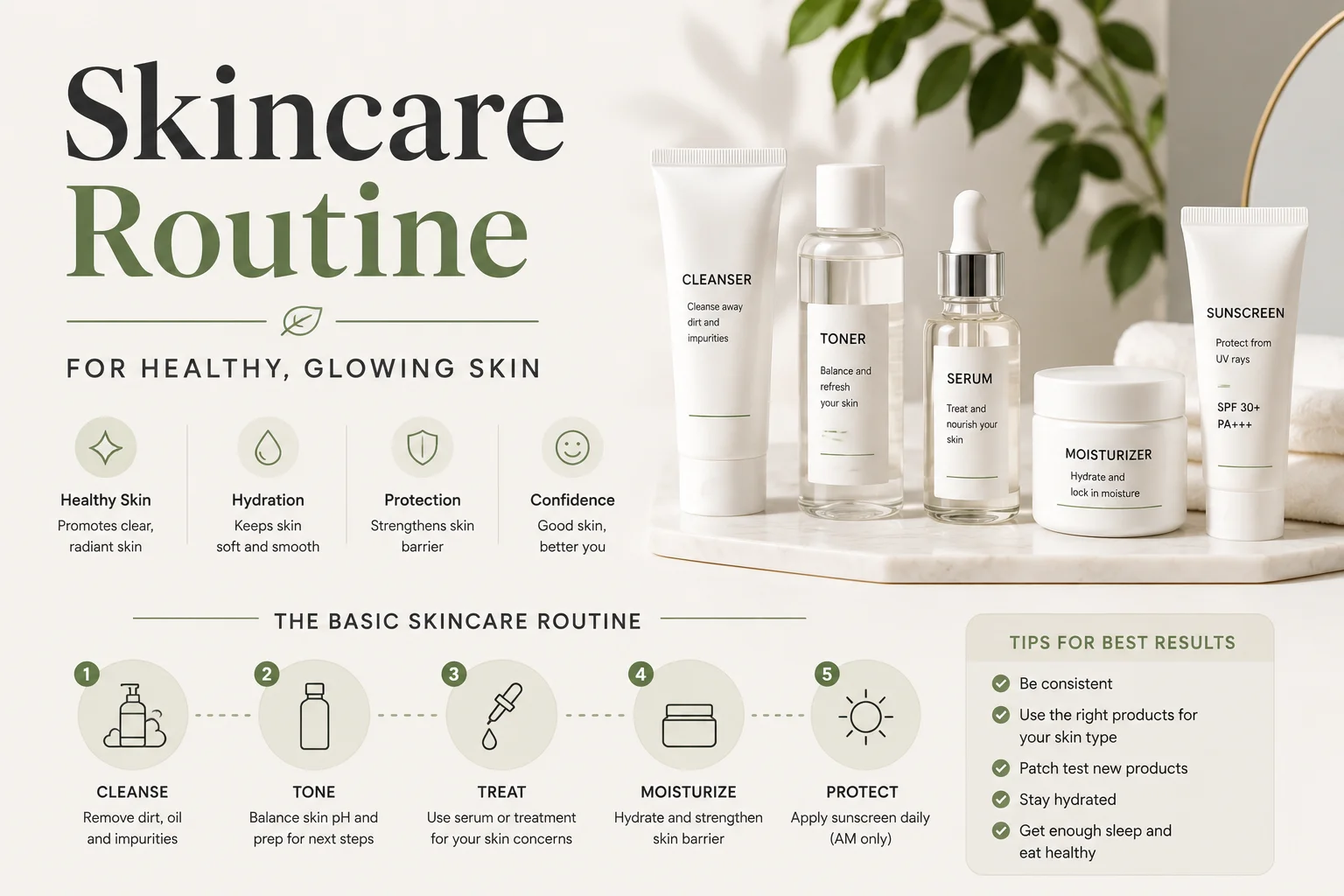
Dermatologists agree on remarkably little in public, but they agree on this: a cleanser, a moisturizer, and a sunscreen, used consistently, do more for your skin than any 12 step routine ever will. Everything past those three is optimization, not necessity.
On This Page 14 sections
That’s not an argument against enjoying skincare as a hobby, plenty of people genuinely do. It’s an argument against confusing the shelf of products with the results, and against spending like the two are the same thing.
Here’s how to actually spend on skincare, what’s worth paying more for, what isn’t, and where the budget brands quietly match the expensive ones.
- Cleanser, moisturizer, and sunscreen are the only three steps with real consensus behind them. Everything else is optional, and optional products are exactly where overspending happens.
- Sunscreen is the one place to actually spend on quality and reapply generously, since it’s the single product doing the most measurable long term work.
- Cleanser barely touches your skin before it’s rinsed off, making it the easiest place to save without losing anything real.
- Brands built around ingredient transparency and lower prices, like Deconstruct and Minimalist, exist specifically because the same active ingredients show up at a fraction of prestige brand prices.
- Adding products faster than your skin can tell you they’re working is the single most common way routines get expensive without getting better.
The Only Three Steps With Real Consensus
A gentle cleanser suited to your skin type, a moisturizer that actually locks in hydration, and a broad spectrum SPF 30 or higher, used every single day, cover the overwhelming majority of what skincare is actually supposed to do: protect the skin barrier and prevent damage before it happens.
Everything past that, serums, essences, toners, sheet masks, is addressing something more specific, and specific problems deserve specific products. But they’re additions to the core three, not replacements for it, and they’re where a routine’s cost multiplies fastest.
What Concentration Actually Matters, Not Just the Ingredient Name
Two products can list the exact same active ingredient and do meaningfully different things, because the concentration, not just the presence, of an ingredient determines whether it actually works. This is exactly the information a proprietary blend hides and an ingredient led brand discloses.
| Ingredient | Typical Effective Range | What to Watch For |
|---|---|---|
| Niacinamide | 5% to 10% | Higher isn’t automatically better, some people find above 10% irritating with no added benefit |
| Vitamin C (ascorbic acid) | 10% to 20% | Degrades with light and air exposure, opaque or airless packaging matters more than the label percentage |
| Retinol | 0.25% to 1% | Start low regardless of skin type, tolerance builds over weeks, not days |
| Salicylic acid (BHA) | 0.5% to 2% | Effective for oily and acne prone skin, can be drying at the higher end of the range |
General dermatological consensus ranges, not brand specific claims. Individual skin tolerance still varies.
Ingredients That Fight Each Other, Not Just Your Skin
Buying more active ingredients doesn’t help if you’re layering ones that cancel each other out or actively cause irritation together. Vitamin C and retinol are the most common conflict, both are effective on their own, but using them in the same routine at the same time increases irritation risk without adding benefit, most guidance splits them, vitamin C in the morning, retinol at night.
Combining a retinol with an AHA or BHA exfoliant on the same night is the other common mistake, both increase skin sensitivity through different mechanisms, and stacking them is a fast way to end up needing a barrier repair product you wouldn’t have needed otherwise. Alternating nights, or using one in the morning and one at night, gets the benefit of both without the compounded irritation.
Where to Actually Spend
Sunscreen is the one product worth prioritizing quality and consistency over price. It’s the single largest driver of long term skin health, and the biggest cost isn’t the product itself, it’s under applying a cheap one or skipping reapplication because the formula feels heavy or leaves a residue you don’t want to deal with twice a day.
Active ingredients with genuine clinical backing, retinoids for texture and fine lines, vitamin C for brightening, niacinamide for barrier support, are worth paying for a well formulated, correctly concentrated version rather than chasing the cheapest option on a shelf. Concentration and stability actually matter here in a way they don’t for a basic cleanser.
Where to Save Without Losing Anything
Cleanser is the easiest place to cut cost. It’s on your skin for well under a minute before it’s rinsed away, which limits how much a premium formula can realistically do versus a well formulated basic one. Neutrogena and Nivea both make gentle, dermatologist tested cleansers that do the same core job as prestige versions costing several times more.
Moisturizer sits in the middle. A basic formula suited to your actual skin type, oily, dry, combination, matters more than a fancy ingredient list, since the wrong texture for your skin type undoes whatever premium ingredients it contains.
Buying for Your Actual Skin Type, Not the Marketing Persona
A huge amount of skincare overspending comes from buying a product formulated for a skin type you don’t actually have, chasing a routine that worked for someone else’s skin on a video rather than your own.
| Skin Type | Look For | Skip |
|---|---|---|
| Oily | Gel or water based, oil free moisturizer, salicylic acid cleanser | Heavy occlusive creams, “extra hydrating” marketing labels |
| Dry | Cream based moisturizer, ceramides, hyaluronic acid | Foaming or clay based cleansers that strip natural oils |
| Combination | Lightweight, non comedogenic formulas, spot treat oily zones separately | A single rich product for the entire face |
| Sensitive | Fragrance free, minimal ingredient lists, patch test everything new | Multiple active ingredients introduced at once |
General starting guidance. Skin type can shift with season, climate, and age, worth reassessing periodically rather than assuming it’s fixed.
Patch testing any new product on a small area of skin, typically the inner forearm, for 24 to 48 hours before applying it to your face costs nothing and prevents the single most expensive mistake in skincare: a full size bottle of something you can’t actually use because it triggered a reaction.
Where Budget Brands Actually Match the Expensive Ones
A specific category of brand exists precisely to close the gap between what an active ingredient costs to formulate and what prestige packaging charges for it. Deconstruct and Minimalist both build their entire positioning around single, clearly labeled active ingredients at percentages you can actually check, rather than proprietary blends you can’t compare.
The Ordinary popularized this exact model globally, plain packaging, ingredient led naming, and pricing that assumes you don’t need to pay for a marketing budget on top of the formula. Dot & Key and The Derma Co compete in the same space specifically for the Indian market, often at a further discount to global equivalents.
None of this means every cheap product works as well as every expensive one. It means the price gap between a well made budget formula and a prestige version of the same active ingredient is usually marketing, not chemistry, and it’s worth checking the actual ingredient list before assuming the expensive jar is doing more.
| Step | Entry Level Option | Reasonable Splurge |
|---|---|---|
| Cleanser | Neutrogena or Nivea | Rarely worth it, formula complexity here adds little |
| Actives (vitamin C, retinol) | Deconstruct or The Ordinary | A well reviewed, clinically dosed premium formula, concentration and stability genuinely vary |
| Sunscreen | Any broad spectrum SPF 30+ you’ll actually reapply | A cosmetically elegant formula if it’s the difference between reapplying and skipping it |
| Ayurvedic or heritage formulations | Kama Ayurveda entry range | Optional, driven by preference for tradition over price |
A general framework, not a claim that any specific listed brand is objectively the best in its price tier.
Your Routine Should Change With the Season, Not Just Grow
A heavier, more occlusive moisturizer in winter and a lighter, gel based one in summer isn’t an excuse to own both permanently rotating, it’s a genuine seasonal need most people’s skin actually has. Buying a second, appropriately lighter or heavier product for the opposite season is cheaper over a year than buying one overly rich moisturizer that fights your skin for half of it.
Sunscreen needs don’t actually drop in winter or on cloudy days, UV exposure continues year round regardless of visible sun, which means the one product this guide says to prioritize spending on is also the one product worth never treating as seasonal.
When Buying a Product Isn’t the Actual Answer
Persistent acne that doesn’t respond to consistent over the counter treatment after eight to twelve weeks, sudden changes to an existing mole, or a rash that doesn’t resolve are all situations where the money saving move is skipping the next product entirely and seeing a dermatologist instead. Self treating a condition that actually needs a prescription strength product or a professional diagnosis is the most expensive mistake in this entire guide, since it means paying for products that were never going to solve the actual problem.
More Products Isn’t a Better Routine, It’s a More Expensive One
Skin needs weeks, not days, to show whether a new product is actually working. Adding a new serum, exfoliant, or treatment every time an ad or a video recommends one means you’re layering cost on top of cost before you know if the last addition even helped.
This is exactly the instinct behind “skinimalism,” the move toward fewer, more deliberate products, which has grown enough to become its own tracked market category. It’s not a trend against skincare, it’s a correction against the assumption that more steps automatically means more results.
Reading Reviews Without Getting Marketed To
A five star average with a huge review count tells you a product doesn’t cause widespread reactions, it doesn’t tell you it works for your specific skin type or concern. Filtering reviews specifically by your skin type, when a platform allows it, is far more useful than the overall star average.
Reviews posted within the first week of a product launching are the least reliable, most skincare results, positive or negative, take at least a month to show up, so an early review is describing texture and scent, not actual efficacy. Weighting reviews from accounts with a purchase history over anonymous or unverified ones is a real, practical filter most shopping platforms make available but few people actually use.
Use Trial Sizes as Actual Research, Not Just a Freebie
A trial or travel size costing a fraction of the full size product is the cheapest possible way to answer the only question that actually matters: does this work on your skin specifically. Treating a sample as a nice bonus rather than a deliberate test run is a missed opportunity to avoid a much more expensive mistake later.
This matters most for actives, retinol, vitamin C, exfoliating acids, where a bad reaction is more likely and a full size bottle represents real money if it turns out to be the wrong formula or concentration for your skin. For a basic moisturizer or cleanser, where the risk of a genuinely bad reaction is lower, going straight to full size is a reasonable shortcut.
Four Rules That Actually Save Money
- Add one product at a time, and give it four to six weeks before deciding whether it’s earning its place, so you’re never paying for something you can’t actually evaluate yet.
- Buy travel or trial sizes of anything new, especially actives, before committing to a full size bottle you might not finish.
- Check the ingredient list against a cheaper alternative before assuming a higher price means a better formula, the actual difference is often packaging and marketing, not the active ingredient itself.
- Don’t buy a specialty product for a problem you don’t actually have. A 10 step anti aging routine in your twenties is money spent solving a problem that doesn’t exist yet.
None of this requires becoming a chemist. It requires reading an ingredient list and a concentration percentage before checkout, patch testing before committing to a full size bottle, and giving a new product enough time to actually prove itself before adding the next one. That’s the entire difference between a routine that works and a shelf that just looks like one.
For the bigger picture on how the skincare industry itself is sized, who owns which brands, and what’s actually driving the category right now, see our separate skincare industry statistics breakdown.
Frequently Asked Questions
What are the only skincare products I actually need?
A gentle cleanser, a moisturizer suited to your skin type, and a broad spectrum SPF 30 or higher used daily. Dermatologists broadly agree these three cover the core work of protecting your skin barrier and preventing long term damage, everything else is optional.
Where should I spend more on skincare?
Sunscreen, since consistent daily use and reapplication matter more than almost anything else in a routine. Active ingredients with genuine clinical backing, like retinoids, vitamin C, and niacinamide, are also worth paying for a properly formulated, correctly concentrated version.
Is expensive skincare actually better than budget skincare?
Not automatically. The price gap between a well formulated budget product and a prestige version of the same active ingredient is usually marketing and packaging, not a meaningful difference in the formula. Checking the actual ingredient list before assuming price equals quality is worth the extra minute.
How often should I add a new product to my routine?
Give each new product four to six weeks before judging whether it’s working, and add only one at a time. Adding several new products at once makes it impossible to tell which one is actually helping, and often leads to over exfoliation or barrier damage instead.
What is skinimalism?
A deliberate move toward fewer, more targeted skincare products instead of long, elaborate routines. It’s grown enough as a consumer behavior to become its own tracked market category, and it’s essentially the practical version of the advice in this guide.
What concentration of niacinamide or vitamin C should I actually look for?
Niacinamide is typically effective between 5% and 10%, with no clear added benefit above that for most people. Vitamin C as ascorbic acid works best between 10% and 20%, though packaging that blocks light and air matters as much as the percentage, since the ingredient degrades on exposure to both.
Can I use vitamin C and retinol together?
Not at the same time without added irritation risk. Most dermatological guidance recommends vitamin C in the morning and retinol at night, so you get the benefit of both without stacking their effects on the skin in a single application.
How do I know what skincare products my skin type actually needs?
Oily skin generally does best with gel or water based, oil free moisturizers and a salicylic acid cleanser. Dry skin needs cream based moisturizers with ceramides or hyaluronic acid, and sensitive skin should stick to fragrance free formulas with minimal ingredient lists, patch testing anything new before applying it to the face.
Should I change my skincare routine with the seasons?
Yes, for moisturizer specifically, a heavier formula in winter and a lighter one in summer matches most people’s actual skin needs. Sunscreen is the exception, UV exposure continues year round regardless of season or cloud cover, so that one product shouldn’t be treated as seasonal.
When should I see a dermatologist instead of trying another product?
If acne doesn’t respond to consistent over the counter treatment after eight to twelve weeks, if an existing mole changes, or if a rash won’t resolve, seeing a dermatologist is both the safer and the more cost effective move. Self treating something that actually needs a diagnosis or a prescription strength product means paying for products that were never going to fix it.